
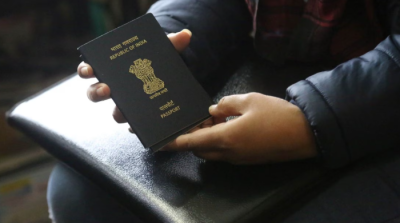
The Union Ministry of Home Affairs notified the Citizenship (Amendment) Rules, 2026, on April 30, 2026, introducing a complete digital overhaul of the Overseas Citizen of India (OCI) framework and tightening citizenship compliance guidelines. These rules amend the older Citizenship Rules, 2009, framed under the principal Citizenship Act, 1955. The primary objective of this amendment is to simplify administrative procedures, reduce physical paperwork, improve tracking through a centralized database, and enforce India’s strict single-citizenship policy by closing existing legal loopholes concerning minors.
Comprehensive Digitization of OCI Framework
The amendment transforms the entire lifecycle of an OCI card—from registration to renunciation—into a paperless system.
Introduction of e-OCI and Digital Registry
- Electronic Credentials: Registered individuals can now receive an electronic OCI (e-OCI) registration under the revised Form XXIX, either alongside or instead of a physical card.
- Central Electronic Registry: The Ministry of Home Affairs will maintain a digital database of all OCI cardholders under the revised Form XXX, phasing out manual, paper-based records.
- Elimination of Duplication: Applicants no longer need to file applications “in duplicate.” The removal of this phrase from Rule 31 eliminates the requirement to submit twin physical copies of documents to authorities.
Online Application Ecosystem
- Mandatory Portal Use: All applications for registration, renewal, and updates must be filed electronically through the official web portal (https://ociservices.gov.in). Manual or postal submissions are no longer accepted.
- Streamlined Timelines: The Bureau of Immigration projects that routine e-OCI approvals will take approximately 15 working days, down from the previous six-to-eight-week paper processing cycle.
Stricter Regulations for Minors and Dual Passports
The 2026 amendment incorporates explicit legal restrictions to maintain the integrity of India’s single-citizenship doctrine.
Absolute Prohibition on Dual Passports
- Hard Restriction: A new proviso added to Rule 3 states that a minor child cannot hold an Indian passport and a passport of any other country at the same time.
- Parental Declaration: Parents applying for an Indian passport for a minor must submit an electronic declaration verifying that the child does not hold, and will not acquire, a foreign passport.
- Surrender Clause: If a minor child currently holds a foreign passport, that passport must be formally surrendered before an Indian passport can be issued. This formalizes a rule that was previously managed via self-declarations during the application stage.
Renunciation, Cancellation, and Appeal Processes
The processes for ending or losing OCI status have been made uniform, transparent, and digitally trackable.
Online Renunciation Mechanism
- Form XXXI Submission: Any individual wishing to give up OCI status must file a declaration in Form XXXI via the online portal.
- Card Surrender: The applicant must submit the declaration to the designated Indian Mission, Post, or Foreigners Regional Registration Officer (FRRO) and physically surrender the original OCI card if one was issued.
- Digital Acknowledgment: Upon successful verification and deletion of the name from the central registry, the authority will issue an electronic acknowledgment in Form XXXII.
Enhanced Cancellation and Appeal Rights
- Action against e-OCI: The central government holds explicit powers to cancel both physical cards and digital e-OCI registrations under Rule 35 if a holder violates Indian law or conditions of registration.
- Non-Surrender Clause: If an OCI registration is cancelled by the government, the status is updated as void in the electronic database even if the individual fails to return the physical card.
- Right to Appeal: The revised Rule 42 establishes a formal review mechanism. Individuals whose applications are rejected can appeal the decision before an authority that sits one rank higher than the original decision-making officer.
Functional Differences under the New Framework
| Operational Feature | Old Rules (2009) | New Rules (2026) |
| Application Submission | Physical paper-based, required in duplicate | Fully online via the designated portal |
| Document Format | Physical OCI booklet only | Physical booklet or e-OCI registration |
| Record Management | Manual registries across separate offices | Centralized Electronic Registry |
| Minor Passport Policy | Handled through basic declarations | Hard legal bar against dual passports |
| Average Processing Time | 6 to 8 weeks | Approximately 15 working days |
| Immigration Integration | Manual processing at checkpoints | Biometric consent for automated e-gates |
Biometric Integration and Border Facilitation
The 2026 rules align OCI processing with modern border management infrastructure.
Fast Track Immigration Programme (FTIP)
- Biometric Consent: Applicants must provide biometric consent during the online OCI registration stage.
- Touchless Transit: This consent enables the pre-loading of biometric markers into digital e-gates at designated international airports across India, allowing for automated, touchless immigration clearance.
- Digital E-Arrival Card: OCI travelers are now required to fill out a digital E-Arrival Card prior to landing, which phases out physical disembarkation forms at airport checkpoints.
IASPOINT Booster Facts for UPSC
- Parent Act: The OCI scheme was originally introduced by amending the Citizenship Act, 1955, through the Citizenship (Amendment) Act, 2005. It does not signify dual citizenship, as the Indian Constitution strictly forbids dual nationality.
- Constitutional Provisions: Articles 5 to 11 in Part II of the Constitution of India deal with Citizenship. Article 9 explicitly states that any Indian citizen who voluntarily acquires foreign citizenship automatically loses their Indian citizenship.
- Parliamentary Authority: Article 11 empowers the Parliament of India to regulate the right of citizenship by law, which forms the legal basis for the Citizenship Act, 1955, and subsequent rules.
- OCI Privileges vs Restrictions: OCI holders enjoy a lifelong, multiple-entry visa to India and maintain parity with Non-Resident Indians (NRIs) in economic, financial, and educational fields. However, they do not possess political rights. They cannot vote, contest elections, or hold constitutional offices such as President, Vice President, or Supreme Court Judge, and they are prohibited from buying agricultural or plantation properties.
- Ineligibility Criteria: Foreign nationals whose parents, grandparents, or great-grandparents were citizens of Pakistan or Bangladesh are completely ineligible for registration under the OCI scheme.