
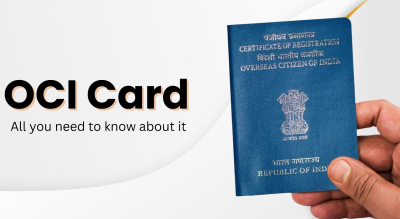
The Union Home Ministry fully digitized the Overseas Citizen of India (OCI) card application process, effective from 1 May 2026, under the Citizenship (Amendment) Rules, 2026. The new framework mandates electronic submission for both OCI registration and renunciation through a central official portal, ending the traditional paper-based system. This policy update removes the previous requirement of a six-month continuous stay in India before applying. Additionally, a uniform global fee structure came into effect on 1 April 2026, alongside mandatory biometric data enrollment to support the integration of OCI cardholders into India’s Fast Track Immigration Programme.
Regulatory Framework and New Amendments
The OCI status is statutory, governed by the provisions of Section 7A of the Citizenship Act, 1955. It acts as a specialized immigration category to facilitate diaspora engagement.
Elimination of the Stay Clause
Prior to the 2026 amendment, applicants residing in India had to complete a six-month continuous stay before filing an OCI application. The new rules eliminate this residency timeframe. Foreign nationals of Indian origin can now file applications immediately upon arrival or during their legal stay, speeding up the registration pipeline for researchers, executives, and families.
Prohibition on Minor Dual Passports
The amended rules explicitly state that minors cannot hold an active Indian passport and a foreign passport simultaneously. For an OCI card to be issued to a minor, any previously held Indian passport must be formally surrendered, and proof of cancellation must be uploaded to the portal alongside their foreign passport details.
Operational Changes and Biometric Mandate
The shift to a completely digital application pipeline changes how international applicants interact with Indian diplomatic missions.
Discontinuation of Postal Submissions
Indian Embassies, High Commissions, and Consulates have stopped accepting physical application packets via postal or courier services. All initial documentation, photographs, and signatures must be uploaded digitally through the central portal.
Mandatory Biometric Enrollment
After the online application undergoes preliminary screening, applicants must schedule an in-person appointment at designated visa application centers or consular offices. This visit is mandatory for capturing biometric data, including facial recognition scans and fingerprints. The biometric data is linked directly to the OCI booklet to prevent identity fraud and cross-verify records at international border checkpoints.
Integration with Fast Track Immigration
The mandatory collection of biometric data links the OCI system with India’s Fast Track Immigration Programme (FTIP-TTP). Registered cardholders with updated biometric records can use automated e-gates at major international airports in India, reducing clearance times at immigration counters.
Financial Outlay and Fee Schedule
The Ministry introduced a standardized, non-refundable fee structure applied across all global jurisdictions and domestic processing centers.
| Application Category | Fee for Overseas Submissions | Fee for Domestic Submissions (Within India) |
| Fresh OCI Registration | 275 USD | 15,000 INR |
| OCI Card Renunciation | 100 USD | 5,500 INR |
| Re-issuance / Miscellaneous Service | 25 USD | 1,400 INR |
| Late Update of Passport Details | 25 USD | 1,400 INR |
Rights, Privileges, and Restrictions
An OCI cardholder receives a life-long visa to visit India but does not hold absolute parity with Indian citizens.
Core Privileges
- Grant of a multiple-entry, multi-purpose life-long visa for visiting India.
- Exemption from registration requirements with the Foreigners Regional Registration Officer (FRRO) for stays of any duration.
- Parity with Non-Resident Indians (NRIs) in economic, financial, and educational fields, except for the acquisition of agricultural or plantation properties.
- Permission to pursue professions like doctors, dentists, nurses, pharmacists, advocates, architects, and chartered accountants in India.
Constitutional and Political Restrictions
- No right to vote in municipal, state assembly, or parliamentary elections.
- Eligibility is denied for holding public office, including positions such as President, Vice-President, Judge of the Supreme Court or High Courts, or member of either House of Parliament.
- Ineligibility for appointment to public services and posts in connection with the affairs of the Union or of any State, unless specifically permitted by a special order of the Central Government.
- Mandatory prior permission, known as a Special Permit, is required from the authorities for undertaking missionary, mountaineering, journalistic activities, or visiting restricted/protected areas.
IASPOINT Booster Facts for UPSC
- Origin of OCI Scheme: The OCI scheme was introduced by amending the Citizenship Act, 1955, in 2005, following recommendations made by the High-Level Committee on Indian Diaspora chaired by L.M. Singhvi.
- PIO and OCI Merger: The Government of India merged the Person of Indian Origin (PIO) card scheme with the OCI card scheme in 2015. All existing PIO cardholders were automatically classified as OCI cardholders.
- Constitutional Ban on Dual Citizenship: Article 9 of the Constitution of India explicitly mandates that any citizen who voluntarily acquires the citizenship of a foreign country automatically loses their Indian citizenship. The OCI card is an immigration document providing visa-free travel, not dual citizenship.
- Ministry of Home Affairs Jurisdiction: Matters relating to the grant, suspension, or cancellation of OCI status fall under the Foreigners Division of the Ministry of Home Affairs (MHA), rather than the Ministry of External Affairs.
- Cancellation Ground Rules: Under Section 7D of the Citizenship Act, 1955, the Central Government can cancel OCI registration if it was obtained by fraud, or if the cardholder shows disaffection towards the Constitution, trades with an enemy during war, or commits an offense punishable with imprisonment for two years or more within five years of registration.