
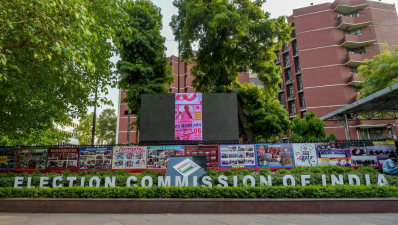
The Election Commission of India announced Phase III of the Special Intensive Revision of electoral rolls on 14 May 2026. This administrative cleanup exercise covers 16 States and 3 Union Territories, targeting more than 360 million electors across the designated areas. Conducted under established statutory frameworks, the operation synchronizes its field machinery with the ongoing house-listing operations of the Census. The exercise relies on extensive on-the-ground human verification, deploying nearly 394,000 Booth Level Officers alongside 342,000 Booth Level Agents from political parties. By purging inaccuracies and enrolling eligible citizens, Phase III ensures verified, inclusionary, and updated voter rolls before the upcoming election cycles.
Statutory and Constitutional Framework
The preparation and purification of electoral rolls in India derive authority from explicit constitutional provisions and parliamentary legislations.
Constitutional Mandates
- Article 324: Vests the superintendence, direction, and control of the preparation of electoral rolls, as well as the conduct of all elections to Parliament and State Legislatures, in the Election Commission of India.
- Article 325: Mandates a single general electoral roll for every territorial constituency. It prohibits the exclusion of any person from the roll on grounds of religion, race, caste, or sex.
- Article 326: Establishes universal adult suffrage, securing the right to register as a voter for every citizen aged 18 years or older, unless disqualified by law.
Statutory Enactments
- Representation of the People Act, 1950: Sections 15 to 25 of this Act govern the allocation of seats, delimitation of constituencies, and the conditions for registration as voters. It defines the rules for preparing and revising electoral rolls.
- Registration of Electors Rules, 1960: Formulated under the 1950 Act, these rules prescribe the detailed executive procedure for registration, filing of claims and objections, inquiry processes, and final publication of the rolls.
Mechanisms of Electoral Roll Revision
The Election Commission of India employs different operational methodologies to maintain the integrity of voter registers depending on demographic changes and temporal gaps.
Special Summary Revision vs. Special Intensive Revision
The table below contrasts the routine yearly methodology with the intensive procedural framework deployed in Phase III.
| Feature | Special Summary Revision (SSR) | Special Intensive Revision (SIR) |
| Operational Nature | Routine, annual exercise conducted nationwide. | Periodic, rigorous cleanup ordered in specific intervals. |
| Primary Methodology | Reactive and voluntary approach; relies on voters submitting individual update applications. | Proactive and intensive framework; involves systematic house-to-house physical enumeration. |
| Core Objective | Focuses on regular enrollment of new 18-year-old voters and minor corrections. | Focuses on purifying rolls from scratch by identifying ghost voters, duplicate entries, and migration gaps. |
| Field Machinery | Operates through designated centers, help desks, and online voter portals. | Deploys extensive field teams working alongside national census data collectors. |
Operational Modalities of Phase III
The Phase III exercise implements a structured timeline consisting of distinct operational blocks:
- House-to-House Verification: Booth Level Officers physically visit residential premises to verify existing details, identify permanently shifted or deceased individuals, and gather fresh enumeration data.
- Rationalization of Polling Stations: Adjusting the physical boundaries or locations of polling booths based on demographic clusters to maintain manageable voter-to-booth ratios.
- Draft Publication and Grievance Redressal: Publishing the preliminary cleaned roll to invite claims for new inclusion or objections against wrong deletions.
- Final Publication: Processing the field data to compile and publish the binding, purified electoral roll on scheduled deadlines.
Geographical Scope and Personnel Metrics
Phase III spans a massive administrative footprint across northern, southern, eastern, northeastern, and central India.
State and Union Territory Coverage
The intensive revision covers 16 States and 3 Union Territories:
- Covered States: Andhra Pradesh, Arunachal Pradesh, Haryana, Jharkhand, Karnataka, Maharashtra, Manipur, Meghalaya, Mizoram, Nagaland, Odisha, Punjab, Sikkim, Tripura, Telangana, and Uttarakhand.
- Covered Union Territories: Chandigarh, National Capital Territory of Delhi, and Dadra and Nagar Haveli and Daman and Diu.
- Explicit Exclusions: Himachal Pradesh, Jammu and Kashmir, and Ladakh are kept out of this phase. The Election Commission of India postponed the exercise in these regions to align with the later completion of Phase II of the Census and to avoid hostile weather in snow-bound upper terrain.
Administrative Personnel
The operation mobilizes a dual-monitoring system comprising state officials and political party representatives to maintain transparency.
- Booth Level Officers (BLOs): Approximately 394,000 grassroots administrative officials, typically local government employees or school teachers, executing the house-to-house enumeration.
- Booth Level Agents (BLAs): Around 342,000 representatives appointed by recognized political parties who accompany the field teams to counter unilateral deletions or biased entries.
Chronology and Varying Qualifying Dates
Unlike routine revisions that use a uniform single date, Phase III utilizes distinct qualifying dates and staggered deadlines tailored to local logistical setups.
Schedule Breakdown by State Clusters
The final execution dates vary by region due to local administrative variables:
- Cluster A (Odisha, Mizoram, Sikkim, Manipur): Utilizes a qualifying date of 1 July 2026. The initial preparation begins in late May 2026, culminating in final publication on 6 September 2026.
- Cluster B (Dadra and Nagar Haveli and Daman and Diu): Maintains a qualifying date of 1 July 2026. House-to-house verification concludes in early July, with final publication scheduled for 11 September 2026.
- Cluster C (Core Phase III States): Incorporates major states like Maharashtra, Karnataka, Jharkhand, and Delhi. These regions use a qualifying date of 1 October 2026. The finalized, clean electoral lists are scheduled for publication on 22 September 2026.
- Cluster D (Extended Timeline States): Nagaland and Tripura follow an extended schedule due to terrain challenges. Their final rolls will be published on 22 November 2026 and 23 December 2026 respectively.
IASPOINT Booster Facts for UPSC
- Ghost Voters: A technical term used by election authorities to designate deceased individuals, duplicate entries of the same voter across multiple constituencies, or non-existent identities remaining on the electoral roll.
- Form 6B: The designated statutory application form introduced for voluntary linking of Aadhaar numbers with voter identity cards to achieve de-duplication.
- Law Commission’s 255th Report: Recommended the implementation of a common electoral roll for Parliamentary, Assembly, and Local Body (Panchayat and Municipal) elections to prevent financial drain and duplication of work.
- National Voters’ Service Portal (NVSP): The single-window digital portal developed by the Election Commission of India to provide online registration, roll checking, and polling station location facilities to citizens.
- De-duplication Software: Advanced technological algorithms used by the state election machineries to flag matching photographs or matching demographic profiles across different constituencies before manual verification.