
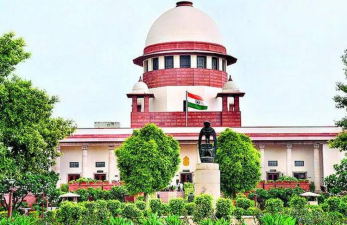
The Supreme Court of India recently clarified the operational boundary of the statutory bar on anticipatory bail under the Scheduled Castes and Scheduled Tribes (Prevention of Atrocities) Act, 1989. In rulings delivered between late 2025 and May 2026, the apex court emphasized that the restriction under Section 18 is not automatic or mechanical. Courts handling pre-arrest bail applications must independently verify the First Information Report (FIR) and primary records to confirm if the allegations prima facie establish a caste-based atrocity. This legal evolving mechanism seeks to preserve the protective spirit of the legislation for marginalized groups while safeguarding individual liberties against arbitrary actions.
Understanding Section 18 and the Anticipatory Bail Bar
Section 18 of the Scheduled Castes and Scheduled Tribes (Prevention of Atrocities) Act, 1989 explicitly rules out the application of Section 438 of the Code of Criminal Procedure, 1973 (now corresponding to Section 482 of the Bharatiya Nagarik Suraksha Sanhita, 2023) concerning anticipatory bail. Parliament introduced this absolute bar to insulate victims from post-complaint coercion, intimidation, and local power imbalances. The statutory mechanics operate as follows:
- The Absolute Bar: If an individual faces direct accusations of committing atrocities under the SC/ST Act, they cannot seek a pre-arrest bail remedy.
- Special Treatment of Offences: Law classifies these offences as a separate category because they stem from historical, systemic caste discrimination and vulnerability.
Evolution of the Prima Facie Test
Judicial intervention over the years has established a narrow exception to Section 18. If the allegations in the FIR, read at face value, do not satisfy the essential legal components of an offence under the Act, the statutory bar ceases to apply. Recent landmark verdicts in 2025 and 2026 have cemented this operational test.
The Kiran v. Rajkumar Jivraj Jain Case (September 2025)
The Supreme Court ruled that while Section 18 imposes an absolute bar when specific caste-based accusations exist, courts possess the room to grant anticipatory bail if the case lacks prima facie merit at the first glance.
Evidentiary Boundaries during Bail Hearings
The apex court laid down clear restrictions for lower courts examining these bail pleas:
- Prohibition of Mini-Trials: Courts cannot enter the evidentiary realm or conduct a mini-trial to test truthfulness during a bail hearing.
- Plain Reading Principle: The evaluation must restrict itself entirely to the averments written in the FIR.
- Individual Role Separation: As upheld by the Bombay High Court in early 2026, a blanket denial of bail to all co-accused is illegal; individual actions must show clear caste-linked targeting.
The “Public View” Requirement (May 2026)
The Supreme Court quashed a series of criminal proceedings by emphasizing that for offences under Section 3(1)(r) and Section 3(1)(s), the insult or abuse must occur in “a place within public view.” If an incident occurs inside the four walls of a residential house with no independent public witnesses present, it fails the public view test, rendering the statutory bail bar inapplicable.
Legal Precedents Shaping the Bail Landscape
| Case Name & Year | Core Judicial Pronouncement |
| State of M.P. v. Ram Krishna Balothia (1995) | Upheld the constitutional validity of Section 18, classifying it as a necessary deterrent against caste violence. |
| Vilas Pandurang Pawar v. State of Maharashtra (2012) | Reiterated that the protection against pre-arrest bail activates immediately once a prima facie case is visible in the FIR. |
| Prathvi Raj Chauhan v. Union of India (2020) | Clarified that courts can entertain anticipatory bail strictly in cases where no prima facie offense under the Act is made out. |
| Kiran v. Rajkumar Jivraj Jain (2025) | Warned High Courts against jurisdictional errors in granting bail where clear caste nexuses and public humiliation exist. |
Key Ingredients for Attracting the SC/ST Act Bar
To validly trigger the Section 18 bar and block anticipatory bail, an FIR must satisfy the following parameters collectively:
- Intentional Humiliation: The accused must intentionally insult or intimidate a member of a Scheduled Caste or Scheduled Tribe.
- Caste Identity Connection: The abuse or intimidation must be explicitly linked to the victim’s caste identity, rather than arising purely out of a general or private property dispute.
- Public Gaze / Public View: The actions must take place in an open area or a location where members of the public can actively see or hear the utterance.
IASPOINT Booster Facts for UPSC
- Constitutional Protections: The SC/ST Act gives teeth to Article 17 (Abolition of Untouchability) and furthers Article 15(4) and Article 21 of the Constitution of India.
- Section 18-A Amendment: Added in 2018, this section clarifies that no preliminary inquiry is required before registering an FIR, and approval for arrest is not mandatory under the Act, reaffirming the strictness of Section 18.
- Special Courts: Section 14 of the Act mandates the establishment of Special Courts and Exclusive Special Courts at the district level for speedy trials of these offenses.
- Scope of Bail Discretion: The Jammu and Kashmir High Court in 2026 held that if the prosecution itself relies on electronic or video evidence to back up an allegation, the court can scrutinize that specific material at the pre-arrest stage to verify the prima facie presence of caste-based slurs.