
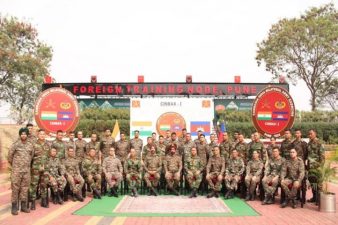
The inaugural edition of exercise CINBAX commenced on December 1, 2024, in Pune. This joint tabletop exercise involves the Indian Army and the Cambodian Army. It aims to enhance cooperation in counter-terrorism operations under the framework of the United Nations. The exercise will run until December 8, 2024.
Objectives of CINBAX
CINBAX focuses on planning and conducting joint counter-terrorism operations. It aims to establish a joint training task force for intelligence, surveillance, and reconnaissance. The initiative promotes collaboration in a CT environment.
Phases of the Exercise
The exercise is structured into three phases. – Phase I – Preparations and orientation for counter-terrorism operations during UN peacekeeping missions. – Phase II – Conduct of tabletop exercises to simulate various scenarios. – Phase III – Finalisation of plans and review of the exercise outcomes.
Key Areas of Focus
CINBAX will cover several critical areas. Discussions will include information operations, cyber warfare, and hybrid warfare. Logistics and casualty management are also key topics. This exercise aims to address various contingencies and enhance operational efficiency.
Indigenous Capabilities
The exercise will showcase Indian-origin weapons and equipment. This aligns with the ‘Atmanirbharta’ initiative, promoting self-reliance in defence production. The focus is on enhancing indigenous capabilities and demonstrating India’s commitment to modernising its military.
Building Trust and Interoperability
CINBAX aims to encourage trust and camaraderie between the Indian and Cambodian armies. The joint exercise is essential for achieving interoperability during peacekeeping operations. It enhances the operational readiness of both forces in collaborative engagements.
Expected Outcomes
The exercise is expected to improve joint operational efficiency. Participants will gain practical vital information about procedures through situation-based discussions. Tactical exercises will provide hands-on experience in counter-terrorism strategies.
Significance of the Exercise
CINBAX represents step in strengthening defence ties between India and Cambodia. It reflects India’s growing role in regional security and its commitment to international peacekeeping efforts. The exercise puts stress on the importance of collaborative approaches in addressing security challenges.
Questions for UPSC:
- Critically examine the role of joint military exercises in enhancing international relations and defence cooperation.
- Discuss the significance of counter-terrorism operations under the framework of the United Nations.
- Explain the concept of ‘Atmanirbharta’ in defence production. How does it impact India’s military capabilities?
- With suitable examples, discuss the challenges faced by armed forces in hybrid warfare scenarios.
Answer Hints:
1. Critically examine the role of joint military exercises in enhancing international relations and defence cooperation.
- Joint military exercises encourage trust and understanding between nations, promoting diplomatic ties.
- They enhance interoperability, allowing forces to work together effectively in operations.
- Such exercises provide a platform for sharing best practices and military strategies.
- They can deter potential aggressors by showcasing military readiness and cooperation.
- Joint exercises often lead to agreements and partnerships, strengthening long-term defence cooperation.
2. Discuss the significance of counter-terrorism operations under the framework of the United Nations.
- UN-backed counter-terrorism operations legitimize international efforts against terrorism.
- They promote a coordinated global response, enhancing information sharing among nations.
- Such operations help in capacity building for nations lacking resources to combat terrorism.
- They align military actions with international law and human rights considerations.
- UN frameworks facilitate a unified approach, reducing the risk of unilateral actions by states.
3. Explain the concept of ‘Atmanirbharta’ in defence production. How does it impact India’s military capabilities?
- ‘Atmanirbharta’ refers to self-reliance in defence production, reducing dependency on imports.
- It encourages indigenous innovation and development of military technology and equipment.
- This initiative aims to boost the domestic defence industry, creating jobs and expertise.
- It enhances national security by ensuring a steady supply of critical military resources.
- Self-reliance improves operational readiness and adaptability in military engagements.
4. With suitable examples, discuss the challenges faced by armed forces in hybrid warfare scenarios.
- Hybrid warfare combines conventional and unconventional tactics, complicating military responses.
- Forces face difficulties in identifying and countering non-state actors and insurgents.
- Cyber warfare poses threat, requiring new strategies and technologies to defend against.
- Logistical challenges arise in coordinating operations across diverse environments and threats.
- Examples include the use of misinformation and propaganda, as seen in conflicts like Ukraine.