
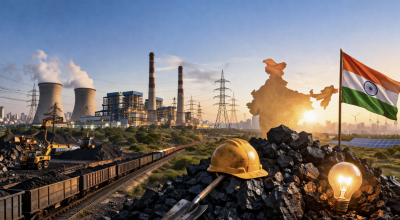
Recent global events have brought into light coal’s continued importance in India’s energy landscape. Geopolitical conflicts, particularly in the Middle East, and disruptions in gas and LPG supplies have exposed vulnerabilities in energy security. Despite environmental concerns, coal remains vital for India’s short- and medium-term energy needs as the country pursues its Viksit Bharat 2047 vision.
Geopolitical Impact on Energy Supply
Wars in the Middle East and global gas crises have disrupted fuel imports. These disruptions have increased the cost and risk of relying on LPG and natural gas. India, like many developing nations, faces fiscal pressure and price shocks due to dependency on imported fuels. This situation underlines the need for energy sources that are domestically available and reliable, with coal filling this gap for now.
Coal and Electricity Generation in India
Coal supplies most of India’s electricity. Renewable energy sources like solar and wind face intermittency and storage challenges. Until grid infrastructure and energy storage improve, coal remains the base load power source. Rising industrial and service sector demands will keep coal relevant to prevent grid instability, especially during peak hours.
Coal-to-Gas and Synthetic Fuels
Technologies converting coal to synthetic fuels such as methanol and dimethyl ether (DME) are gaining attention. These fuels can partially replace LPG in cooking and industry. This reduces dependence on imported gas and stabilises prices. Coal gasification and cleaner coal technologies are essential for improving energy security and reducing pollution.
Social and Environmental Dimensions
A rapid coal phase-out risks harming coal-dependent communities. India’s energy transition must balance environmental goals with social equity. Reskilling and rehabilitation of workers in coal regions are vital. Cleaner coal technologies like supercritical plants and carbon capture will reduce emissions. Coal and renewables must coexist in India’s energy future.
Topics for Prelims:
Coal in India’s Energy Mix
- Coal provides over 70% of India’s electricity.
- Renewables face challenges of intermittency and storage.
- Coal is crucial for base load power during peak demand.
- Supercritical and ultra-supercritical plants improve efficiency.
- Coal gasification produces synthetic fuels like methanol and DME.
Geopolitical Energy Challenges
- Middle East conflicts disrupt global fuel supplies.
- Imported LPG prices are volatile and affect household budgets.
- Energy security is linked to domestic fuel availability.
- Global energy transition must consider fair access for developing nations.
- Coal mitigates risks from international fuel supply shocks.
Coal and Social Impact
- Coal communities face identity and livelihood challenges.
- Sudden coal phase-out risks social trauma.
- Reskilling and rehabilitation are key for coal workers.
- Energy transition must be people-centric and equitable.
- Coal ecosystem supports millions of livelihoods in India.
Questions for Mains:
- Critically analyse the role of coal in India’s energy security amidst global geopolitical tensions and supply disruptions. [GS-III-Economic Development]
- With suitable examples, estimate the challenges and opportunities of integrating coal and renewable energy in India’s electricity grid. [GS-III-Science & Technology]
- Point out the social implications of abrupt coal phase-out on coal-dependent communities and discuss measures for a just energy transition in India. [GS-IV-Ethics, Integrity and Aptitude]
- Underline the impact of global energy supply chain disruptions on developing economies like India and critically analyse policy responses for sustainable energy security. [GS-II-International Relations]
Answer Hints:
1. Critically analyse the role of coal in India’s energy security amidst global geopolitical tensions and supply disruptions. [GS-III-Economic Development]
- Coal supplies over 70% of India’s electricity, making it central to energy security.
- Geopolitical conflicts (e.g., Middle East wars) disrupt global gas and LPG supplies, exposing vulnerabilities in imported fuel dependence.
- Coal is domestically available, reducing fiscal pressure and price shocks from volatile international markets.
- Intermittency and storage challenges with renewables make coal essential as base load power, especially during peak demand.
- Coal-to-gas and synthetic fuel technologies (methanol, DME) offer pathways to reduce LPG dependence and enhance energy resilience.
- Energy security requires balancing environmental goals and reliable supply; coal remains indispensable until renewable infrastructure matures.
2. With suitable examples, estimate the challenges and opportunities of integrating coal and renewable energy in India’s electricity grid. [GS-III-Science & Technology]
- Renewables (solar, wind) face intermittency and inadequate energy storage, causing grid instability during peak demand periods.
- Coal provides stable base load power and backup during renewable supply dips, ensuring grid reliability.
- Supercritical and ultra-supercritical coal plants improve efficiency and reduce emissions per electricity unit.
- Challenges include pollution from coal and need for advanced grid infrastructure and storage solutions to integrate renewables effectively.
- Technologies like carbon capture, utilisation, and storage (CCUS) can mitigate coal’s environmental impact during coexistence.
- Example – Evening peak demand dip in renewables compensated by coal and hydro/wind backup marks symbiotic energy mix necessity.
3. Point out the social implications of abrupt coal phase-out on coal-dependent communities and discuss measures for a just energy transition in India. [GS-IV-Ethics, Integrity and Aptitude]
- Abrupt coal phase-out risks livelihood loss, social trauma, and identity erosion for millions in coal ecosystem communities.
- Coal regions depend economically and culturally on coal mining and related industries.
- Just transition requires reskilling, rehabilitation, and repurposing of coal workers and communities.
- Energy transition must be people-centric, addressing inequality and supporting social equity.
- Gradual coal evolution through cleaner technologies and diversification of local economies mitigates social disruption.
- Policy focus on community engagement and sustainable livelihood alternatives is essential for ethical transition.
4. Underline the impact of global energy supply chain disruptions on developing economies like India and critically analyse policy responses for sustainable energy security. [GS-II-International Relations]
- Global conflicts and crises (Middle East wars, gas supply shocks) cause volatile fuel prices and supply uncertainty for India.
- Dependence on imported LPG and gas creates fiscal strain and vulnerability to international market fluctuations.
- Policy responses include promoting domestic coal use, coal-to-synthetic fuel pathways, and enhancing renewable energy capacity.
- Energy security strategy balances short-term reliance on coal with long-term renewable infrastructure development.
- Calls for a fair global energy system ensuring equitable access for Global South and developing economies.
- Emphasis on diversifying energy mix, investing in storage and grid infrastructure, and encouraging geopolitical resilience.