
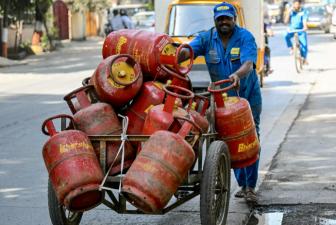
State-owned oil marketing companies executed a sharp upward revision in the prices of commercial and free-trade liquefied petroleum gas cylinders effective from 1 May 2026. While the cost of a 14.2-kilogram domestic cooking gas cylinder remained unchanged at ₹913 in New Delhi, the retail price of a 19-kilogram commercial LPG cylinder jumped by ₹993, crossing the ₹3,000 threshold to touch ₹3,071.50. This adjustment represents the third consecutive monthly price increase, driven primarily by persistent geopolitical disruptions in West Asia. Concurrently, new supply chain security guidelines mandating digital authentication at the doorstep came into effect nationwide.
Macroeconomic Drivers of LPG Pricing
Domestic pricing models for petroleum products are strictly tied to international supply lines and fiscal indicators.
Geopolitical Escalation and Chokepoints
The primary driver behind the price surge is the widening conflict involving the United States, Iran, and Israel. This tension triggered prolonged security blockades along the Strait of Hormuz, a narrow maritime corridor responsible for the daily transit of approximately 20% of global liquefied natural gas and petroleum shipments. The resulting premium on maritime freight and insurance directly inflated landing costs for Indian importers.
Market Import Dependency
India relies heavily on external supply chains, importing more than 60% of its total domestic LPG consumption requirements. The primary sourcing hubs are concentrated across the Middle East and the United States. Consequently, any severe disruption in external production centers or a depreciation of the Indian Rupee against the US Dollar raises the procurement costs borne by domestic oil marketing companies.
Re-pricing Architecture and Segment Revisions
The Ministry of Petroleum and Natural Gas channels pricing updates through state-owned entities such as Indian Oil Corporation, Bharat Petroleum Corporation, and Hindustan Petroleum Corporation on the first day of every month.
| Cylinder Category | Physical Volume | Price Revision (1 May 2026) | New Retail Rate (Delhi) | Primary Consumer Segment |
| Commercial Cylinder | 19 Kilograms | Hiked by ₹993 | ₹3,071.50 | Hotels, Restaurants, Caterers, and Small Industries. |
| Domestic Cylinder | 14.2 Kilograms | No Change | ₹913.00 | Household Kitchens and Residential Units. |
| Free Trade LPG (FTL) | 5 Kilograms | Hiked by ₹261 | Variable by location | Migrant Workers, Students, and Low-income Urban Sub-segments. |
Status of Liquid Transportation Fuels
While commercial cooking gas prices faced historic increases, retail prices for petrol and diesel remained completely steady across the country on the same date. This internal price stabilization coincided with separate actions by the Ministry of Finance, which slashed the Special Additional Excise Duty on the export of diesel to ₹23 per litre and on Aviation Turbine Fuel to ₹33 per litre to balance upstream refining margins.
Institutional Reforms and Delivery Supply Chain Regulations
Alongside the updated financial rates, the central government enacted structural changes to the physical distribution framework to eliminate black-marketing, product diversion, and multi-layered leakage.
Delivery Authentication Code (DAC) System
The Ministry of Petroleum and Natural Gas made the One-Time Password verification protocol legally mandatory for all physical LPG cylinder handovers at the doorstep.
- Mechanism: Upon generating a monthly refill request, the centralized backend system sends a unique 4-digit or 6-digit Delivery Authentication Code via SMS to the consumer’s verified mobile number.
- Verification: The delivery agent cannot mark the transaction as complete or release the pressurized cylinder without inputting the correct code into their handheld point-of-sale device.
- Replacement: This automated verification entirely replaces the old practice of manual signatures or verification through hardcopy blue consumer logbooks.
Operational Restrictions on Multi-Sourcing
To optimize the supply network amid global energy vulnerabilities, the government introduced a ban prohibiting a single household from holding both a domestic LPG connection and a Piped Natural Gas network line simultaneously. Users with active piped natural gas lines must surrender their physical backup LPG cylinders to their respective distributors. Furthermore, automated booking intervals have been modified to curb artificial demand and hoarding. Urban consumers must observe a minimum lock-in gap of 25 days between two consecutive cylinder refills, while the rural distribution cycle has been extended up to 45 days based on regional logistics.
IASPOINT Booster Facts for UPSC
- Pradhan Mantri Ujjwala Yojana (PMUY): Launched in May 2016 by the Ministry of Petroleum and Natural Gas, this flagship scheme deposits direct targeted subsidies into bank accounts to provide clean cooking fuel to below-poverty-line households. Beneficiaries must complete mandatory Aadhaar-based electronic Know Your Customer verification to remain eligible.
- Composition of LPG: Liquefied Petroleum Gas consists primarily of a flammable mixture of liquefied hydrocarbons, dominated by Propane (C3H8) and Butane (C4H10).
- The Odorant Compound: Because pure LPG is entirely odorless and colorless, manufacturers mix a minute concentration of Ethyl Mercaptan (C2H5SH), a sulfur-bearing chemical, into the gas during processing to ensure rapid detection in case of hazardous household leaks.
- Statutory Grievance Redressal: The centralized national emergency helpline number for reporting active LPG gas leakages, corporate supply fraud, or black-marketing offenses across India is 1906, operating under twenty-four-hour monitoring by state oil corporations.