
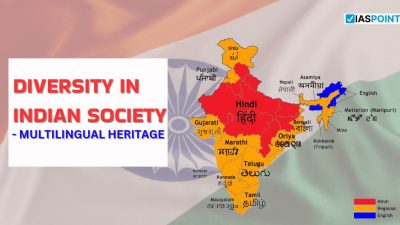
Overview of Linguistic Diversity
India is characterised by a vast linguistic diversity, with over 1,600 languages spoken across the country. The Census of 2011 recorded 19,569 distinct mother-tongue names. The Eighth Schedule of the Constitution of India recognises 22 major languages, which are considered literary languages. These languages include Hindi, Bengali, Tamil, Telugu, and Marathi, among others. Each state in India has a unique linguistic composition, with certain languages being predominant in specific regions while being minority languages in others.
Scheduled Languages
The Eighth Schedule of the Constitution of India lists 22 languages that hold official status. This includes languages from various families such as Indo-Aryan, Dravidian, Austroasiatic, and Tibeto-Burman. The recognition of these languages puts stress on the importance of linguistic heritage in India. The major language families include Indo-Aryan languages like Hindi and Punjabi, Dravidian languages such as Tamil and Telugu, and others.
Language Distribution
Hindi is the most widely spoken language in India and serves as the official language of the central government. Other regional languages include Bengali, Telugu, Marathi, and Tamil. The formation of states based on linguistic lines, such as Andhra Pradesh in 1953, marks the importance of language in regional identity and governance.
Multilingualism in India
Many individuals in India are bilingual or multilingual, often speaking their mother tongue alongside Hindi and English. This multilingualism is integral to cultural identity and community cohesion. Language serves not only as a means of communication but also as a marker of identity within diverse communities.
Language and Education
The medium of instruction in Indian schools varies by state, with many using regional languages and English as a second language. The National Policy on Education promotes multilingual education, encouraging the use of multiple languages in educational settings. This policy aims to enhance learning outcomes and preserve linguistic diversity.
Language and Literature
India boasts a rich literary tradition across its many languages. Each language has its own classical and modern literary heritage, contributing to the cultural tapestry of the nation. Notable authors include Rabindranath Tagore, R. K. Narayan, and Kamala Das, who have made contributions to Indian literature.
Language and Media
The Indian media landscape is diverse, with newspapers, television, and radio broadcasting in multiple languages. There is a growing digital presence for regional languages on the internet and social media platforms. This expansion facilitates access to information and cultural content for speakers of various languages.
Language and Politics
Language movements have emerged in India advocating for the recognition and promotion of regional languages. The Official Languages Act of 1963 governs the use of Hindi and English in official contexts. These movements reflect the political significance of language in asserting cultural identity and rights.
Challenges to Multilingual Heritage
Many indigenous and minority languages face endangerment due to urbanisation and migration, which often leads to the dominance of a few major languages. The loss of linguistic diversity poses a threat to cultural heritage and community identity.
Government Initiatives
The Government of India has implemented various initiatives to promote regional languages. Schemes like the National Translation Mission aim to enhance access to literature in multiple languages. Cultural programmes celebrate linguistic diversity through festivals and events, encouraging appreciation for different languages.
Global Context
The Indian diaspora contributes to the global multilingual landscape, with Indian languages being spoken worldwide. Language serves as a medium for cultural exchange and international relations, facilitating connections between diverse cultures.
Analytical Topics on Multilingual Heritage
Research on linguistic identity and social cohesion explores how language shapes individual and collective identities within communities. The effectiveness of language policies in education, particularly regarding academic performance and cultural retention, is a critical area of study. Additionally, the endangerment of indigenous languages and preservation efforts highlight the need for sustainable practices to maintain linguistic diversity. The role of media in promoting multilingualism is also , as it influences public perception and accessibility of information across linguistic groups.
Questions for UPSC:
- Critically analyze the impact of linguistic diversity on social cohesion and cultural identity in India.
- Estimate the effectiveness of the National Policy on Education in promoting multilingual education and its implications for students from different linguistic backgrounds.
- Point out the challenges faced by indigenous languages in India and evaluate the government initiatives aimed at their preservation.
- What role does media play in promoting multilingualism in India? Discuss its influence on public perception and cultural exchange.
Answer Hints:
1. Critically analyze the impact of linguistic diversity on social cohesion and cultural identity in India.
- India is home to over 1,600 languages, reflecting rich cultural diversity.
- Linguistic diversity can enhance social cohesion by encouraging mutual respect and understanding among different communities.
- However, it can also lead to fragmentation and conflict if not managed properly.
- Regional languages often strengthen local identity, while Hindi and English serve as unifying languages.
- Government policies and educational systems influence the balance between promoting diversity and ensuring national integration.
2. Estimate the effectiveness of the National Policy on Education in promoting multilingual education and its implications for students from different linguistic backgrounds.
- The National Policy on Education emphasizes the importance of mother tongue in early education.
- Multilingual education aims to improve cognitive skills and academic performance among students.
- Implementation varies across states, affecting its overall effectiveness.
- Language barriers can hinder access to quality education for students from minority backgrounds.
- Increased awareness and resources are needed to support teachers and curriculum development in multilingual settings.
3. Point out the challenges faced by indigenous languages in India and evaluate the government initiatives aimed at their preservation.
- Indigenous languages face threats from globalization and the dominance of major languages.
- Many indigenous languages are at risk of extinction due to lack of speakers and institutional support.
- The government has initiated programs like the “National Translation Mission” and “Eighth Schedule” inclusion to promote these languages.
- Community involvement and awareness are crucial for the success of preservation efforts.
- Challenges remain in terms of funding, resources, and effective implementation of policies.
4. What role does media play in promoting multilingualism in India? Discuss its influence on public perception and cultural exchange.
- Media serves as a platform for diverse languages, promoting awareness and appreciation of linguistic diversity.
- Television, radio, and digital platforms often broadcast content in multiple languages, enhancing accessibility.
- Media influences public perception by shaping narratives around language and identity.
- Social media facilitates cultural exchange and interaction among speakers of different languages.
- However, media representation can also reinforce stereotypes or marginalize certain languages if not balanced.