
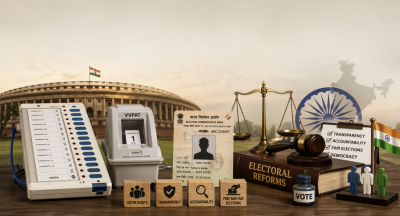
India’s electoral system is undergoing a major transformation with the adoption of ECINet, a digital platform designed to streamline election processes. Despite advanced technology, the system faces challenges due to outdated bureaucratic mindsets. This has led to increased procedural burdens on voters rather than easing their electoral participation. The current Chief Election Commissioner (CEC), an IIT Kanpur alumnus with Harvard credentials, has intensified reforms such as the Special Intensive Revision (SIR), reshaping electoral governance but also raising concerns about accessibility and institutional balance.
Evolution of Electoral Governance
Post-independence, the Election Commission of India (ECI) was passive and often ignored by local authorities. Electoral malpractices were common until T. N. Seshan’s tenure in the 1990s. He enforced strict rules, introduced voter ID cards, and curtailed misuse of power, establishing the ECI as a credible constitutional body. Subsequent innovations included Electronic Voting Machines, VVPAT, and NOTA, strengthening electoral integrity.
Technological Integration and Challenges
ECINet is a digital backbone for electoral processes, operational in beta for over a decade. It aims to simplify voter registration, candidate filings, and grievance redressal. However, the coexistence of modern platforms with legacy bureaucratic procedures creates confusion. The front-end user interface is improved but back-end processes remain complex and opaque, leading to citizen frustration and distrust.
Institutional Mindset and Democratic Values
The electoral bureaucracy reflects a hierarchical, control-oriented mindset rooted in colonial legacy. This contrasts with a techno mindset that emphasises transparency, efficiency, and citizen empowerment. Scenes of candidates standing with folded hands before seated officials symbolize this power imbalance. For a mature democracy, a shift towards service orientation and mutual respect between officials and citizens is essential.
Implications of Special Intensive Revision (SIR)
SIR 2025-26, launched under the current CEC, has expanded the scale and intensity of electoral roll revisions. While intended to improve accuracy, it has imposed procedural hurdles on voters, including senior officials and professionals. This reversal of traditional roles—where citizens now seek inclusion rather than being facilitated—raises questions about accountability and democratic legitimacy.
Topics for Prelims:
Election Commission of India (ECI)
- Constitutional authority overseeing elections in India.
- Introduced Electronic Voting Machines (EVMs) and Voter ID cards.
- Enforces Model Code of Conduct during elections.
- Transitioned from passive to assertive institution post-1990s.
- Currently led by a CEC with a strong technological and administrative background.
ECINet
- Digital platform for electoral processes and governance.
- Supports voter registration, candidate filings, and grievance redressal.
- Operates with front-end (citizen interface) and back-end (bureaucratic processes).
- Designed to enhance transparency and efficiency.
- Challenges include underutilisation due to bureaucratic inertia.
Special Intensive Revision (SIR)
- Electoral roll revision exercise initiated to improve voter list accuracy.
- Expanded in scale and intensity under current CEC.
- Has increased procedural demands on voters.
- Impacted diverse sections including senior officials and professionals.
- Raised concerns about accessibility and citizen burden.
Questions for Mains:
- Critically discuss the impact of technological integration on electoral governance in India, denoting the challenges posed by bureaucratic inertia. [GS-II-Constitution of India & Polity]
- Examine the role of the Election Commission of India in strengthening democratic processes since independence, with examples from key reforms and innovations. [GS-II-Constitution of India & Polity]
- With suitable examples, discuss the significance of institutional mindset in shaping governance outcomes and citizen trust in democratic systems. [GS-IV-Ethics, Integrity and Aptitude]
- Analyse the implications of Special Intensive Revision exercises on voter participation and electoral inclusivity in India, and suggest measures to balance technological efficiency with citizen-centric governance. [GS-II-Governance]
Answer Hints:
1. Critically discuss the impact of technological integration on electoral governance in India, denoting the challenges posed by bureaucratic inertia. [GS-II-Constitution of India & Polity]
- Introduction of ECINet as a digital backbone for electoral processes—aiming for transparency, efficiency, and real-time accountability.
- Front-end improvements (voter interfaces) vs. back-end legacy bureaucratic procedures causing complexity and opacity.
- Bureaucratic inertia – hierarchical mindset, compliance-heavy workflows, and resistance to cultural change despite technological advances.
- Resulting citizen frustration and procedural burdens—voters compelled to queue for corrections and inclusion.
- Need for techno mindset – shifting from control to facilitation, digitising workflows vs. merely overlaying technology on old systems.
- Conclusion – Technology’s potential underutilised due to institutional mindset; reform requires cultural and procedural transformation, not just digital tools.
2. Examine the role of the Election Commission of India in strengthening democratic processes since independence, with examples from key reforms and innovations. [GS-II-Constitution of India & Polity]
- Post-independence ECI was passive, often ignored, allowing electoral malpractices and local collusion.
- T.N. Seshan’s tenure (1990s) as a turning point – strict enforcement of Model Code of Conduct, voter ID cards introduction, curb on misuse of state machinery.
- Introduction of Electronic Voting Machines (EVMs), VVPAT, NOTA, and Elector Photo Identity Cards enhancing transparency and voter confidence.
- Annual National Voters’ Day reinforcing democratic commitment and voter participation.
- Modern innovations like ECINet aimed at digitisation and streamlining electoral governance.
- Overall, ECI evolved into a credible constitutional authority balancing firm control with citizen-centric legitimacy.
3. With suitable examples, discuss the significance of institutional mindset in shaping governance outcomes and citizen trust in democratic systems. [GS-IV-Ethics, Integrity and Aptitude]
- Bureaucratic mindset rooted in colonial hierarchy—control-oriented, opaque, and compliance-heavy versus techno mindset focused on transparency and facilitation.
- Example – Candidates standing with folded hands before seated officials symbolising power imbalance and hierarchical distance.
- Impact on citizen trust – procedural complexity and burdens cause anxiety, reducing democratic legitimacy and voter confidence.
- Political-bureaucratic duality – symbolic humility by politicians vs. actual distance from electorate, eroding authentic engagement.
- Need for cultural shift – bureaucracy embracing service ethos, political actors demonstrating genuine accountability and responsiveness.
- Ethical governance demands mutual respect, openness, and citizen empowerment to restore trust and democratic health.
4. Analyse the implications of Special Intensive Revision exercises on voter participation and electoral inclusivity in India, and suggest measures to balance technological efficiency with citizen-centric governance. [GS-II-Governance]
- SIR 2025-26 expanded scale and intensity of electoral roll revisions, aiming to improve accuracy but increasing procedural hurdles for voters.
- Impact – large sections of electorate, including senior officials and professionals, face exclusion risks and bureaucratic complexities.
- Shift from facilitation to citizen burden—voters queueing for inclusion, correction, raising concerns about accessibility and democratic legitimacy.
- Technological paradox – despite ECINet’s capabilities, bureaucratic inertia limits seamless service delivery and transparency.
- Suggested measures – simplify rules, enable real-time decisions, proactive information disclosure, reduce human discretion, and enhance grievance redressal.
- Promote cultural shift in bureaucracy towards responsiveness, making technology truly citizen-centric to restore trust and participation.