
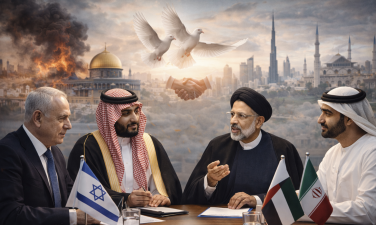
On March 29, 2026, Pakistan hosted meeting of Foreign Ministers from Saudi Arabia, Türkiye, Egypt and Pakistan in Islamabad. The aim was to explore peace prospects in the ongoing West Asia conflict. This follows Pakistan’s diplomatic engagements with Iran and China seeking regional stability. Despite these efforts, a ceasefire remains elusive due to deep mistrust and conflicting objectives among key players.
Ceasefire Challenges
The primary hurdle is achieving a ceasefire acceptable to all parties. The United States and Israel have shifting goals, ranging from denuclearisation to regime change in Iran. Israel aims to neutralise Iran’s strike capabilities but is reluctant to end hostilities prematurely. Iran is severely impacted but unwilling to concede defeat. Mutual distrust and ongoing attacks complicate the ceasefire prospects.
Mediation and Peacekeeping
Effective mediation requires enforcement mechanisms. A UN-mandated peacekeeping force is essential to guarantee security and monitor compliance. However, obtaining UN Security Council approval is difficult due to veto powers and political interests, especially of the US. Historical precedents like the 1956 Suez Crisis show peacekeeping can succeed if backed by strong global leadership.
Regional and Global Roles
Countries like Egypt, Türkiye and Pakistan may contribute troops for peacekeeping. China’s recent five-point peace plan emphasises humanitarian aid and persuading Iran towards ceasefire but lacks binding commitments. Gulf countries are expected to fund these efforts. India is advised to maintain diplomatic dialogue with all sides without direct involvement, potentially rallying the Global South at the UN to support peace initiatives.
Humanitarian and Strategic Implications
The conflict has caused widespread humanitarian distress and energy supply disruptions affecting neighbouring regions. A lasting peace would stabilise global energy markets and reduce regional tensions. However, competing interests and alliances make resolution complex, requiring sustained multilateral diplomacy.
Topics for Prelims:
West Asia Conflict
- Involves Iran, Israel, US and regional actors.
- Key issues – nuclear ambitions, territorial control, regional dominance.
- Impact on global energy supply via Strait of Hormuz.
- Proxy wars and alliances complicate peace efforts.
- Humanitarian crises due to prolonged conflict.
UN Peacekeeping
- Requires Security Council mandate or General Assembly resolution.
- Peacekeepers enforce ceasefire and protect civilians.
- Success depends on backing by major powers.
- 1956 Suez Crisis as precedent for bypassing UNSC veto.
- Challenges include troop contributions and neutrality.
Pakistan’s Diplomatic Role
- Hosted key regional peace talks in 2026.
- Engaged with Iran and China for conflict resolution.
- Holds strategic ties with Saudi Arabia and Gulf states.
- Balancing act between regional powers and global players.
- Potential contributor to UN peacekeeping forces.
Questions for Mains:
- Critically analyse the role of regional powers in mediating conflicts in West Asia with examples from recent peace initiatives. [GS-II-International Relations]
- Comment on the challenges faced by the United Nations in enforcing peacekeeping missions in politically sensitive conflicts and suggest reforms. [GS-II-Governance]
- Explain the strategic significance of the Strait of Hormuz in global geopolitics and how it influences conflict dynamics in West Asia. [GS-I-World & Physical Geography]
- With suitable examples, discuss the impact of prolonged conflicts on global energy security and the role of diplomacy in mitigating such crises. [GS-III-Economic Development]
Answer Hints:
1. Critically analyse the role of regional powers in mediating conflicts in West Asia with examples from recent peace initiatives. [GS-II-International Relations]
- Regional powers like Saudi Arabia, Türkiye, Egypt, and Pakistan actively engage in peace talks (e.g., Islamabad meeting, 2026).
- Pakistan’s diplomatic outreach includes talks with Iran and China to encourage stability.
- Complex alliances and rivalries (e.g., Saudi-US alignment, Türkiye’s NATO membership, Egypt’s recognition of Israel) shape mediation roles.
- Limitations include mistrust from conflicting parties and conflicting strategic interests (e.g., Iran’s skepticism about mediators).
- Examples of regional troop contributions and peacekeeping potential illustrate practical involvement.
- Regional powers often act as intermediaries balancing global and local interests but face challenges due to proxy dynamics and external influences.
2. Comment on the challenges faced by the United Nations in enforcing peacekeeping missions in politically sensitive conflicts and suggest reforms. [GS-II-Governance]
- UN peacekeeping requires Security Council mandate, often blocked by veto powers (notably US in West Asia conflicts).
- Political interests of permanent members hinder impartial enforcement and timely deployment.
- Need for physical presence to enforce ceasefires conflicts with sovereignty and legality issues.
- Historical precedent – 1956 Suez Crisis ‘Uniting for Peace’ resolution bypassed UNSC deadlock but needs strong global leadership.
- Challenges include troop contributions, neutrality of forces, and funding sources.
- Suggested reforms – curbing veto abuse, enhancing General Assembly’s role, clearer mandates, diversified troop contributors, and stronger enforcement mechanisms.
3. Explain the strategic significance of the Strait of Hormuz in global geopolitics and how it influences conflict dynamics in West Asia. [GS-I-World & Physical Geography]
- Strait of Hormuz is a critical chokepoint for global oil and gas supply, linking Persian Gulf to global markets.
- Approximately 20% of world’s petroleum passes through it, making it vital for energy security.
- Control over the Strait equates to influence over global energy prices and supply stability.
- US aims to ‘secure’ the Strait akin to Panama Canal control, influencing its regional military and diplomatic strategies.
- Iran’s location allows it to threaten or disrupt passage, escalating regional tensions and proxy conflicts.
- Conflict in West Asia often revolves around access and control of this strategic waterway, intensifying hostilities and international involvement.
4. With suitable examples, discuss the impact of prolonged conflicts on global energy security and the role of diplomacy in mitigating such crises. [GS-III-Economic Development]
- Prolonged West Asia conflicts disrupt energy supply chains, causing volatility in oil and gas markets.
- Energy crises affect neighboring regions and global economies, increasing inflation and supply shortages.
- Examples – Strait of Hormuz tensions, attacks on oil infrastructure (e.g., Pars gas field), and sanctions on Iran.
- Diplomatic efforts (e.g., Pakistan-led peace talks, China’s five-point peace plan) aim to stabilise supply routes and reduce hostilities.
- Multilateral diplomacy, including Global South initiatives at the UN, can encourage ceasefires and restore market confidence.
- Humanitarian aid and peacekeeping contribute indirectly by stabilizing affected regions and enabling reconstruction.