
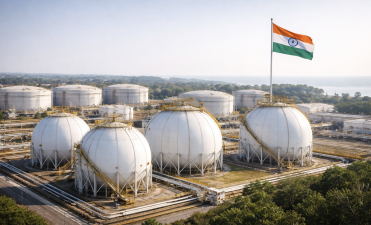
Recently, a CEEW report noted that India’s strategic petroleum reserves cover only about 9–10 days of net crude import needs, while the national buffer (including commercial stocks) is roughly 74 days. The government is planning major expansions and new policy measures to raise resilience.
Current issue
India’s dedicated SPR capacity (Visakhapatnam, Mangaluru, Padur) stands at 5.33 million metric tonnes (~39 million barrels), meeting about 9–10 days of net import needs. National commercial plus strategic buffer is roughly 74 days. Dependence on six suppliers for over 85% of crude increases exposure to supply shocks and price volatility.
Why this matters
Governance: Short strategic cover reduces policy space during external shocks and complicates crisis decision-making. Economy: Supply disruptions raise domestic fuel inflation, fiscal strain from subsidies and market intervention. Security & foreign policy: Concentrated import sources constrain strategic autonomy and diplomatic options. Energy transition: Lack of gas storage undermines reliability of gas-based transition pathways.
Current status and vulnerabilities
Dedicated SPR: 5.33 Mt (~39 million barrels) across three underground sites. Effective SPR cover: 9–10 days of net imports. National buffer including commercial stocks: ~74 days. Major vulnerabilities: concentrated supplier base (>85% from six countries), no dedicated strategic gas storage despite near-50% LNG import dependence, and limited commercial stockholding norms.
| Metric | India (current) | Selected comparators |
|---|---|---|
| Dedicated SPR days (net import cover) | 9–10 days | Japan / South Korea: >200 days |
| National buffer (strategic + commercial) | ~74 days | N/A |
| Dedicated SPR capacity | 5.33 Mt (~39 million barrels) | — |
Strategic gas storage gap
India lacks dedicated strategic natural gas storage. Nearly half of gas requirement is met by LNG imports. Absence of long‑term gas buffer raises vulnerability to global LNG market tightness, spot-price spikes, and shipping disruptions. Gas storage is also necessary for seasonal and industrial demand smoothing and for supporting intermittent renewables where gas acts as firming fuel.
Policy initiatives and planned expansions
- National reserve policy (proposal): Plan to expand crude storage goals from current national buffer (~74 days) to 100–150 days under consideration.
- Phase II SPR development: New site proposed at Chandikhol (Odisha); additional capacity at Padur (Karnataka); salt cavern storage under evaluation in Rajasthan.
- Commercial stockholding norms: Proposal to require refiners to hold ~30 days of crude inventories, up from the operational norm of 15 days.
- Public-sector action: Ministry of Petroleum & Natural Gas working with OMCs to boost stockholding capacity and implement Phase II sites.
- International storage agreements: ISPRL‑ADNOC agreement to expand UAE-linked crude storage in India to 30 million barrels (from 5.8 million barrels).
Institutional framework and international cooperation
Key institutions: Ministry of Petroleum & Natural Gas, Indian Strategic Petroleum Reserves Limited (ISPRL), state‑run OMCs, refiners, CEA/PIB for policy coordination. Cooperation instruments: Bilateral storage agreements (e.g., ADNOC), commercial lease arrangements, swap lines, and long‑term commercial contracts. These tools augment physical capacity and provide emergency drawdown options.
Geopolitical and economic implications
- Geopolitical risk: Heavy reliance on West Asian suppliers and Russia concentrates strategic risk; disruptions raise diplomatic costs and constrain foreign policy choices.
- Price risk: Low dedicated SPR reduces ability to smooth domestic prices during global crude shocks, increasing inflationary pressure.
- Market signalling: Expanded reserves and diversified supplier relationships can improve negotiating leverage and market credibility.
Major challenges in SPR and gas storage expansion
- Capital and financing: Large upfront costs for underground caverns, terminals and associated infrastructure.
- Land and permissions: Site acquisition, environmental clearances and local opposition slow projects (relevant for Chandikhol and Rajasthan sites).
- Technical complexity: Salt cavern engineering, geotechnical studies, storage integrity and leak prevention require specialised expertise.
- Operational costs: Procurement timing, maintenance, security and insurance increase running costs of reserves.
- Coordination: Aligning OMCs, refiners, ISPRL and the private sector on commercial terms and access rights is complex.
- Gas storage specifics: Geological suitability for underground gas storage is limited; LNG‑based floating storage and above‑ground tanks have different cost and safety profiles.
Way forward — pragmatic steps
- Fast-track Phase II: Prioritise Chandikhol and Padur expansions and complete feasibility for Rajasthan salt caverns with strict timelines and independent technical audits.
- Mandate commercial stocks: Implement refiner inventory norms (30 days) with phased compliance and contingency financing support.
- Develop strategic gas storage: Identify geological sites, deploy subsurface caverns where feasible and use LNG FSRU/FSUs as interim solutions.
- Financing models: Use PPPs, government budgetary support, sovereign wealth investments and bilateral financing tied to storage agreements.
- Diversify supply and contracts: Secure long‑term contracts with varied suppliers, build storage-linked swap arrangements and regional storage partnerships.
- Operational governance: Establish clear drawdown rules, market intervention protocols and an emergency response plan with triggers and stakeholder roles.
- Technical capacity: Invest in salt cavern technology, geotechnical studies, and train specialised workforce through international collaboration.
Model Questions
- Analyse the current state of India’s strategic petroleum reserves and assess the implications of limited dedicated SPR cover for the country’s energy security and economy. [GS-III: Economic Development]
- Examine the policy measures and institutional arrangements proposed to expand India’s crude oil and gas storage capacity. Evaluate their likely effectiveness. [GS-III: Economic Development]
- How can international cooperation and storage agreements reduce India’s geopolitical vulnerabilities in crude and LNG supplies? Discuss with examples. [GS-II: International Relations]
- Identify major technical, financial and administrative challenges in enlarging India’s SPR and strategic gas storage. Suggest a viable implementation roadmap. [GS-III: Economic Development]
Hint: State current SPR cover (9–10 days) and national buffer (~74 days). Discuss import concentration (>85% from six countries), price and supply risks, fiscal and inflationary impacts, constraints on policy and diplomacy, lack of gas storage. Recommend expanding SPR, diversifying suppliers, and mandating commercial inventories.
Hint: Describe national reserve policy (100–150 days target), Phase II sites (Chandikhol, Padur, Rajasthan salt caverns), ISPRL role, OMC and refiner inventory proposals (30 days). Evaluate timelines, financing needs, technical feasibility, and implementation risks; suggest PPPs and phased targets for effectiveness.
Hint: Explain storage‑linked diplomacy, bilateral agreements (ISPRL‑ADNOC expansion to 30 million barrels), swap lines, joint investments and long‑term contracts. Show how these measures diversify sources, provide emergency access, strengthen negotiating leverage and integrate energy policy with broader strategic partnerships.
Hint: List challenges: capital cost, land/clearances, salt‑cavern engineering, storage operation, governance. Roadmap: fast‑track feasibility, phased construction, PPP and bilateral financing, mandate commercial stocks, interim LNG storage solutions, capacity building and clear drawdown/market protocols.