
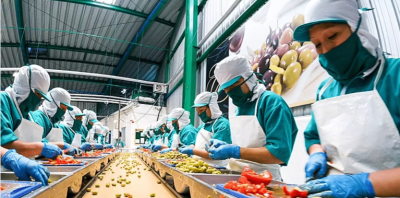
India’s food processing sector is being supported through three major schemes of the Ministry of Food Processing Industries. These schemes aim to strengthen infrastructure, improve value addition, reduce post-harvest losses, and create better market linkages from farm gate to retail outlets. The schemes are Pradhan Mantri Kisan SAMPADA Yojana (PMKSY), Production Linked Incentive Scheme for Food Processing Industry (PLISFPI), and PM Formalisation of Micro Food Processing Enterprises (PMFME).
PMKSY and Infrastructure Creation
PMKSY provides financial assistance for setting up and expanding food processing industries. It is a Central Sector Scheme operational up to 2025-26 with a total outlay of Rs 6,520 crore for the 15th Finance Commission cycle. Under this scheme, 1,607 projects have been approved across the country till 31 December 2025.
PLISFPI and Global Competitiveness
PLISFPI is designed to support the creation of global food manufacturing champions and promote Indian food brands in international markets. The scheme is operational from 2021-22 to 2026-27 with an outlay of Rs 10,900 crore. A total of 170 proposals have been approved under the scheme till 31 December 2025.
PMFME and Micro Enterprises
PMFME is a Centrally Sponsored Scheme that provides financial, technical, and business support to micro food processing enterprises. It is operational up to 2025-26 with an outlay of Rs 10,000 crore. Under this scheme, 1,72,707 micro food processing enterprises have been approved for assistance across the country till 31 December 2025.
Sectoral Impact and Policy Objective
These schemes are intended to modernise the food processing ecosystem and improve supply chain efficiency. They support storage, transport, processing, and value addition. The broader goals include higher returns for farmers, lower wastage of agricultural produce, reduced post-harvest losses, and increased processing capacity.
Last Modified: April 28, 2026