
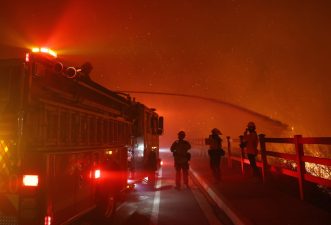
The Franklin Fire in Malibu, California, began on December 9, 2023. This wildfire has consumed over 4,000 acres and affected approximately 22,000 residents. As of now, it is only 20% contained. The cause of the fire is still under investigation. However, experts highlight two main factors contributing to its severity – the Santa Ana winds and climate change.
Santa Ana Winds Explained
Santa Ana winds are strong, dry winds that occur in Southern California. They develop when high pressure builds over the Great Basin. This pressure contrasts with the low pressure over the California coast. The resulting pressure difference drives powerful winds from the inland deserts towards the Pacific Ocean. As these winds descend from the mountains, they compress and heat up, leading to extremely low humidity levels. This arid condition can dry out vegetation, making it highly susceptible to ignition. Santa Ana winds typically occur from October to January, coinciding with the wildfire season in California.
Impact of Climate Change
Climate change influences wildfire behaviour in California. While Santa Ana winds have always been part of the region’s ecosystem, the wildfire season has lengthened in recent years due to rising global temperatures. A study published in 2021 noted that California’s annual burn season has extended over the last two decades, with peak fire activity shifting from August to July. Furthermore, a 2023 study indicated that ten of the largest wildfires in California’s history occurred within the last twenty years. Climate change has led to warmer springs and summers, resulting in earlier snowmelt and prolonged dry seasons. This situation increases moisture stress on vegetation, making forests more vulnerable to wildfires.
Future Projections
The future of California’s wildfire risk appears grim. Continued greenhouse gas emissions will exacerbate the effects of climate change. A recent United Nations report warned that current climate policies could lead to a global temperature rise of more than 3 degrees Celsius by the end of the century. This increase is more than double the 1.5 degrees Celsius threshold deemed critical for preventing severe climate impacts. Without changes in policy and behaviour, the frequency and intensity of wildfires like the Franklin Fire are likely to increase.
Preparedness and Response
Effective wildfire management requires coordination among local, state, and federal agencies. Communities must prepare for potential evacuations and develop emergency response plans. Public awareness campaigns can educate residents about fire safety and prevention. Additionally, investing in infrastructure improvements can help mitigate fire risks.
Environmental Considerations
Wildfires play a natural role in some ecosystems, promoting new growth and biodiversity. However, the increasing frequency and intensity of wildfires due to climate change pose threats to both human life and the environment. Balancing ecological needs with human safety remains a critical challenge for policymakers.
Questions for UPSC:
- Critically analyse the role of climate change in altering wildfire patterns in California.
- What are the implications of Santa Ana winds on local ecosystems? Explain with suitable examples.
- How do greenhouse gas emissions contribute to the phenomenon of climate change? What measures can be taken to mitigate these effects?
- Explain the importance of community preparedness in managing wildfire risks. What strategies can be employed for effective response?
Answer Hints:
1. Critically analyse the role of climate change in altering wildfire patterns in California.
- Climate change has lengthened California’s wildfire season, shifting peak fire activity from August to July.
- Increased global temperatures have led to warmer springs and summers, resulting in earlier snowmelt.
- Studies indicate that ten of the largest wildfires in California’s history occurred in the last 20 years.
- Prolonged dry seasons increase moisture stress on vegetation, making forests more vulnerable to fires.
- Current greenhouse gas emissions trends project a rise in global temperatures, exacerbating wildfire risks.
2. What are the implications of Santa Ana winds on local ecosystems? Explain with suitable examples.
- Santa Ana winds dry out vegetation, increasing the risk of wildfires in Southern California.
- These winds can lead to rapid fire spread, as seen in the Franklin Fire affecting Malibu.
- The winds occur seasonally, typically from October to January, coinciding with peak wildfire activity.
- They can disrupt local ecosystems by damaging habitats and altering plant communities post-fire.
- Examples include increased fire frequency that can hinder the recovery of native plant species.
3. How do greenhouse gas emissions contribute to the phenomenon of climate change? What measures can be taken to mitigate these effects?
- Greenhouse gas emissions trap heat in the atmosphere, leading to global warming and climate change.
- Major sources include fossil fuel combustion, deforestation, and industrial processes.
- Mitigation measures include transitioning to renewable energy sources and enhancing energy efficiency.
- Carbon capture and storage technologies can reduce emissions from existing power plants.
- International cooperation and policy changes are essential for effective climate action.
4. Explain the importance of community preparedness in managing wildfire risks. What strategies can be employed for effective response?
- Community preparedness reduces the impact of wildfires through organized evacuation and response plans.
- Public awareness campaigns educate residents on fire safety and prevention measures.
- Establishing clear communication channels ensures timely information dissemination during emergencies.
- Investment in infrastructure, such as firebreaks and controlled burns, can mitigate fire risks.
- Engaging local organizations and volunteers encourages community resilience against wildfires.