
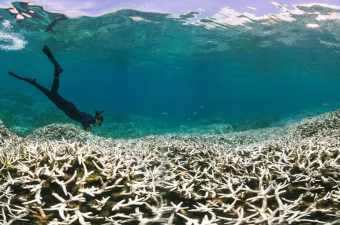
The National Oceanic and Atmospheric Administration (NOAA) and the International Coral Reef Initiative (ICRI) confirmed the conclusion of the fourth and largest global mass coral bleaching event. Spanning early 2023 to mid-2025, this event impacted 84% of global reef areas across 83 countries in the Pacific, Atlantic, and Indian Oceans.
Key Findings and Ecological Impact
- Scale and Intensity: Surpassed all previous records. NOAA updated its alert system to include Alert Levels 3, 4, and 5, with Level 5 indicating immediate multi-species mortality.
- Thermal Tipping Point: The Global Tipping Points Report 2025 identified shallow coral reefs as the first planetary-scale system to cross an irreversible threshold, estimated at 1.2°C of warming above pre-industrial levels.
- Consequences: Loss of natural wave attenuation (97% energy absorption), threats to food security for nearly one billion people, and collapse of marine biodiversity (reefs support 25% of marine life).
- Resilience Strategies: Research is prioritizing cryobanking (assisted gene flow), deep-water nurseries, and resilience-based management to mitigate local stressors like overfishing.
IASPOINT Booster Facts
- Biological Mechanism: Corals bleach when heat stress causes them to expel zooxanthellae (symbiotic algae), leading to starvation and death.
- Global History:
- 1st (1998): 16% of reefs lost.
- 3rd (2014–2017): Previous longest event.
- 4th (2023–2025): Largest on record.
- Indian Context: India hosts major reefs in the Gulf of Mannar, Gulf of Kutch, Lakshadweep, and Andaman & Nicobar Islands.
- Legal Protection: All hard corals are protected under Schedule I of the Wildlife Protection Act, 1972.