
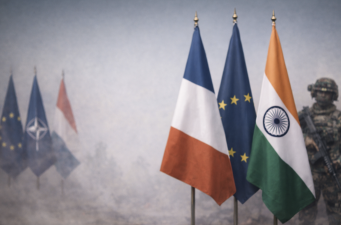
The international order in 2026 faces serious fragmentation. Armed conflicts have reached levels unseen since World War II. Trade tensions and economic imbalances among major global regions weaken collective progress. The war in West Asia marks the difficulty of resolving disputes through diplomacy. France and India are working closely to promote peace and stability in this troubled region. French President Emmanuel Macron and Prime Minister of India Narendra Modi coordinate efforts to build a fairer and more inclusive global system.
Current Global Security and Economic Context
The world faces multiple armed conflicts and geopolitical tensions. Economic growth models of major powers cause trade imbalances. These issues threaten global stability. The might is right mentality risks dominating international relations. Renewed multilateralism is needed to counteract egotism and unilateral actions. France, hosting the 2026 G7 Summit, aims to address these challenges by encouraging cooperation and resilience.
France’s Role in the 2026 G7 Presidency
France holds the G7 presidency in 2026 with the summit in Évian from 15 to 17 June. President Macron invited Prime Minister Modi to participate. France’s agenda focuses on structural destabilisation factors, economic and geopolitical imbalances, and societal resilience. It prioritises sustainable global growth, strategic supply chain security, combating drug trafficking, and digital safety for children. Environmental protection, especially biodiversity, oceans, and water, is also central.
Expanding G7 Partnerships and India’s Involvement
The G7 now includes emerging economies and regional partners in discussions. India, Brazil, South Korea, Saudi Arabia, and Ukraine joined the Foreign Ministers’ Meeting near Paris in March. India plays a key role in preparatory talks for the Évian Summit. France aims to uphold the G7’s founding principles – solidarity, economic stability, and collective responsibility. The special global strategic partnership between France and India strengthens joint responses to world challenges.
Focus Areas for Global Cooperation
The G7 under France’s leadership seeks balanced and convergent outcomes. Key areas include enhancing strategic supply chains, fighting illicit drug trade, and building safe digital environments. Environmental sustainability remains a priority with a focus on biodiversity and ocean health. The inclusion of emerging economies aims to create a more effective and inclusive global governance system.
Topics for Prelims:
France-India Strategic Partnership
- Elevated to a special global strategic partnership in 2026.
- Focus on peace and stability in West Asia.
- Collaboration in multilateral forums like G7.
- Joint efforts on economic and geopolitical challenges.
- Shared commitment to environmental protection.
G7 Summit 2026
- Held in Évian, France, June 15-17, 2026.
- France holds the presidency in 2026.
- Expanded to include India, Brazil, South Korea, Saudi Arabia, Ukraine.
- Focus on structural destabilisation and economic imbalances.
- Priorities – supply chains, drug trafficking, digital safety, environment.
Global Multilateralism
- Renewed multilateralism needed to address global crises.
- Challenges include armed conflicts and trade tensions.
- Might is right mentality threatens diplomacy.
- Inclusive global governance involves emerging economies.
- Collective responsibility and solidarity are core principles.
Questions for Mains:
- Critically analyse the role of renewed multilateralism in addressing 21st-century global conflicts and economic imbalances. [GS-II-International Relations]
- Explain how expanding the G7 to include emerging economies like India enhances global governance and collective security. [GS-II-International Relations]
- With suitable examples, comment on the challenges and opportunities of strategic partnerships between countries like France and India in global diplomacy. [GS-II-International Relations]
- What are the environmental priorities in international summits such as the G7, and how do they contribute to sustainable development goals? Discuss with examples. [GS-III-Environment & DM]
Answer Hints:
1. Critically analyse the role of renewed multilateralism in addressing 21st-century global conflicts and economic imbalances. [GS-II-International Relations]
- Multilateralism promotes dialogue and cooperation among multiple nations to resolve conflicts and economic issues collectively.
- Renewed multilateralism counters the might is right unilateral approach, encouraging fairness and inclusivity in global governance.
- It addresses complex global challenges like armed conflicts, trade tensions, and geopolitical imbalances that single countries cannot handle alone.
- Inclusion of emerging economies enhances legitimacy and effectiveness of multilateral institutions.
- Examples – France’s G7 presidency involving India and others to tackle economic destabilisation and security threats.
- Challenges include divergent national interests, power asymmetries, and enforcement of multilateral decisions.
2. Explain how expanding the G7 to include emerging economies like India enhances global governance and collective security. [GS-II-International Relations]
- Inclusion of emerging economies brings diverse perspectives and addresses global issues more comprehensively.
- Emerging powers like India contribute to tackling cross-cutting threats such as supply chain resilience, drug trafficking, and digital security.
- Broadens legitimacy of G7 decisions, reflecting current geopolitical realities beyond traditional Western powers.
- Facilitates cooperation on economic imbalances and geopolitical tensions through shared responsibility.
- India’s active role in preparatory talks strengthens strategic partnerships and global peace efforts.
- Challenges include aligning interests of developed and emerging economies for consensus-building.
3. With suitable examples, comment on the challenges and opportunities of strategic partnerships between countries like France and India in global diplomacy. [GS-II-International Relations]
- Opportunities – Enhanced cooperation on peace and stability (e.g., West Asia conflict), joint efforts in multilateral forums like G7.
- Strategic partnerships enable pooling of resources and influence to address global economic and security challenges.
- France-India partnership elevated to a special global strategic partnership in 2026, emphasizing shared values and global responsibilities.
- Challenges include managing differing national priorities, regional geopolitical sensitivities, and balancing relations with other powers.
- Such partnerships strengthen global governance by promoting solidarity, economic stability, and collective responsibility.
- Example – Coordinated efforts of Macron and Modi to encourage peace and stability and environmental protection initiatives.
4. What are the environmental priorities in international summits such as the G7, and how do they contribute to sustainable development goals? Discuss with examples. [GS-III-Environment & DM]
- Key priorities – Biodiversity conservation, ocean health, water resource management, and climate change mitigation.
- Focus on protecting natural ecosystems supports SDG 13 (Climate Action), SDG 14 (Life Below Water), and SDG 15 (Life on Land).
- G7 under France’s presidency promotes sustainable growth by integrating environmental protection with economic policies.
- Examples – Commitments to safeguard oceans and biodiversity, and efforts to build safe digital environments for future generations.
- Environmental cooperation at summits encourages global partnerships and mobilizes resources for sustainable development.
- Challenges include ensuring implementation and balancing economic growth with environmental sustainability.