
Daily Activities

UPSC Prelims Current Affairs

UPSC Mains Current Affairs

Current Affairs

Hellfire missile Iran blockade

Hellfire missile Iran blockade

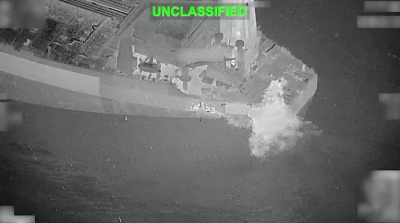
The U.S. military fired an AGM-114 Hellfire missile to disable the Botswana-flagged commercial oil tanker M/T Lexie in international waters as it transited toward Iran’s Kharg Island. Executed by U.S. Central Command (CENTCOM), the precision strike targeted the unladen vessel’s engine room after the crew ignored multiple maritime warnings over a 24-hour period. This operational intervention is part of a comprehensive naval blockade initiated by President Donald Trump to disrupt maritime traffic entering or exiting Iranian ports, applying strategic economic pressure on Tehran to negotiate a new peace agreement on American terms.

The Strategic Naval Blockade and Operational Metrics

The U.S. military has systematically enforced strict maritime containment measures within the Persian Gulf and the Gulf of Oman to choke off Iran’s primary trade links.

Scope of Enforced Maritime Blockade

The blockade began on April 13 to completely restrict commercial shipping access to vital Iranian trading hubs. U.S. naval assets and aerial patrols monitor regional chokepoints to intercept non-compliant vessels.

Interdiction Record Since April 13
  • Disabled Vessels: Six commercial ships have been disabled via targeted kinetic actions after failing to comply with maritime directions.
  • Redirected Traffic: A total of 122 merchant vessels attempting to breach the blockade parameters have been successfully intercepted and forced to alter their course away from Iranian waters.
Importance of Kharg Island Target Destination

The M/T Lexie was tracking directly toward Kharg Island. Located in the northeastern Persian Gulf, Kharg Island serves as Iran’s primary offshore marine terminal, handling approximately 90 percent of the country’s crude oil exports. Disrupted access to this critical infrastructure directly impacts Iran’s economic survival.

Technical Profile of the AGM-114 Hellfire Missile

The choice of a Hellfire missile highlights the U.S. military’s intent to enforce the blockade via sub-lethal tactical disabling rather than destroying the targeted merchant ships.

System ParameterSpecifications and Combat Capability
ManufacturerLockheed Martin
Primary ClassificationAir-to-ground, surface-to-surface precision-guided missile
Physical DimensionsLength: 1.63 meters (64 inches); Weight: 45 kg to 49 kg
Propulsion SystemSolid-fuel rocket motor achieving speeds up to Mach 1.3
Operational Range7 kilometers to 11 kilometers depending on launch platform and variant
Guidance SystemSemi-active laser homing or millimeter-wave radar seeker units
Warhead VariationsHigh-Explosive Anti-Tank (HEAT), blast-fragmentation, or thermobaric
Damage Control Mechanics

The strike demonstrates precision targeting capabilities. By placing a compact 8 to 9 kg warhead directly into the engine compartment, the missile completely neutralized the ship’s mechanical propulsion while avoiding the hull breaches that would capsize the vessel or trigger catastrophic environmental oil spills.

Geopolitical Implications and International Maritime Law

The aggressive enforcement of a unilateral blockade in international shipping lanes carries severe legal and strategic consequences.

Pressure for a Diplomatic Deal

The Trump administration is using maritime interdiction as a primary tool of economic warfare. The overt destruction of propulsion systems sends a clear signal to international shipping lines that standard commercial insurance policies will not cover voyages to Iranian terminals, accelerating Iran’s commercial isolation.

Escalation Risks in Shipping Corridors

This enforcement mechanism risks retaliatory asymmetrical actions. Incidents like the Islamic Revolutionary Guard Corps (IRGC) targeting neutral carriers like the Swiss-owned Sariska V at regional ports emphasize how quickly maritime blockades can degrade overall regional maritime security.

IASPOINT Booster Facts for UPSC

  • Flag of Convenience (FOC): The M/T Lexie flew a Botswana flag. Under international maritime law, a Flag of Convenience allows a ship’s owner to register the vessel in a foreign nation to enjoy lower taxes, cheaper labor, and lenient regulations, separate from the owner’s actual country of origin.
  • U.S. Fifth Fleet: Headquartered in Manama, Bahrain, the U.S. Navy’s Fifth Fleet maintains operational command over naval forces in the Persian Gulf, Red Sea, Arabian Sea, and parts of the Indian Ocean, serving as the primary implementer of regional maritime blockades.
  • Batesian Strategy of Disabling Strikes: Militaries prefer utilizing low-collateral weapons like specialized Hellfire variants or the AGM-114R9X “Ninja” missile (which uses pop-out blades instead of explosives) to neutralize target hardware without triggering wider kinetic escalations or casualties.
  • Sanction Enforcement Legality: Under the United Nations Convention on the Law of the Sea (UNCLOS), blockades are traditionally considered acts of war. Unilateral blockades enforced outside of a UN Security Council resolution frequently generate complex international disputes regarding freedom of navigation in international straits.
Last Modified: June 5, 2026

Leave a Reply

Your email address will not be published. Required fields are marked *

Archives