
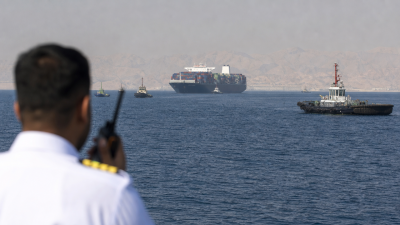
On 23 June 2026 the International Maritime Organization announced a coordinated plan to evacuate about 11,000 seafarers stranded in the Persian Gulf amid the West Asia war.
Key Features of the Evacuation Plan
- Scope: Evacuation of c.11,000 seafarers in cooperation with Iran, Oman, other coastal states, the United States and the maritime industry.
- Routes: Two temporary corridors through the Strait of Hormuz — an Omani‑coast route for exiting traffic and an Iranian‑coast route for inbound or bidirectional transit.
- Capacity: New corridors allow about 20–30 ship transits daily versus c.130 via the pre‑war central Traffic Separation Scheme.
Operational Details
- Phasing: Evacuation proceeds in phases; individual vessels are contacted and assigned an allocated transit day.
- Inputs: Oman’s Ministry of Defence and Pakistan’s National Hydrographic Office provided a phased plan, temporary corridor designs and scheduling advice.
- Traffic Control: Vessels must remain in position awaiting instructions to reduce congestion and collision risk in confined corridors.
Maritime Safety and Legal Context
- Mines Risk: Central TSS declared unsafe due to mines, prompting rerouting.
- Safety Verification: IMO obtained safety guarantees and verified navigation conditions before operations.
- Casualties: 14 seafarers confirmed killed in the conflict.
- Enabling Arrangement: Operations follow a mid‑June 2026 US‑Iran agreement/MoU permitting coordination.
IASPOINT Booster Facts
- IMO: UN specialised agency for maritime safety and security; established 1948; headquarters London.
- Traffic Separation Scheme (TSS): Navigation measure implemented under IMO guidelines and COLREGs to separate opposing streams of traffic.
- Strait of Hormuz: Strategic chokepoint connecting Persian Gulf to Gulf of Oman; pre‑war heavy commercial traffic central to global energy shipments.