
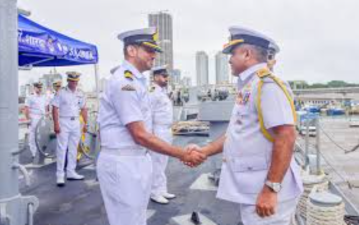
Indian Naval Ship INS Sharda concluded a successful bilateral port call at Colombo, Sri Lanka, on 13 June 2026. The deployment reinforced long-standing defence ties through a series of professional exchanges, cross-deck visits, and specialized training exercises with the Sri Lankan Navy. This operational visit directly aligns with India’s MAHASAGAR philosophy, which prioritizes collective maritime security, shared prosperity, and active capacity building among partner nations across the Indian Ocean Region.
The MAHASAGAR Initiative
Institutional Doctrine
MAHASAGAR, an acronym for Mutual and Holistic Advancement for Security and Growth Across Regions, expands upon the foundational architecture of the 2015 SAGAR (Security and Growth for All in the Region) vision. This updated doctrine transitions India’s role from a regional security manager to an active first responder across the broader global maritime geography.
Core Pillars of the Framework
- Trade for Development: Unifying logistics networks, improving critical port infrastructure, and reducing maritime supply chain disruptions.
- Capacity Building: Sharing operational expertise, conducting multi-national technology transfers, and training friendly foreign navies.
- Mutual Security: Mitigating traditional and non-traditional maritime threats through joint surveillance, satellite data pooling, and coordinated patrols.
Functional Capacity Building and Interoperability
Tactical Training Modules
During the port call, personnel from the Sri Lankan Navy participated in specialized shipboard training modules designed to enhance tactical readiness and emergency management.
| Training Category | Core Operational Focus Areas |
| Tactical Gunnery | Small arms handling, maintenance protocols, and precision targeting principles. |
| Damage Control | Basic firefighting mechanics, leak sealing, and shipboard flooding mitigation. |
| Medical Response | First aid delivery, casualty stabilization, and battlefield trauma management. |
| Search and Rescue | Open-water rescue procedures, life-support operations, and emergency evacuation. |
Operational Camaraderie
The engagement extended beyond technical operations into institutional diplomacy. Rear Admiral Jagath Kumara, Commander Western Naval Area of the Sri Lanka Navy, reviewed the vessel and interacted with the Indian crew to enhance mutual coordination. The schedule also featured friendly sports fixtures and joint yoga sessions to foster baseline professional trust between the two maritime forces.
Geopolitical Dynamics in the Indian Ocean Region
Strategic Significance of Sri Lanka
Sri Lanka occupies a critical geographical position adjacent to crucial global Sea Lines of Communication (SLOCs) in the Indian Ocean. Securing access to Sri Lankan ports allows the Indian Navy to maintain comprehensive Maritime Domain Awareness (MDA).
Countering External Footprints
Developing close bilateral defense networks helps balance external commercial and military activities in the region. Regular joint operations, such as the SLINEX bilateral exercises and replenishment visits, help keep the immediate neighborhood aligned with shared regional interests.
IASPOINT Booster Facts for UPSC
- INS Sharda Vessel Profile: INS Sharda is an indigenous Sukanya-class offshore patrol vessel (OPV) armed with a 76mm main gun and capable of operating Chetaks or advanced light helicopters.
- Bi-Annual Dialogue Mechanism: MAHASAGAR also serves as a high-level virtual dialogue conducted bi-annually by the Indian Navy with maritime leaders from ten Indian Ocean countries, including Comoros, Kenya, Maldives, Mauritius, Mozambique, Seychelles, and Tanzania.
- Bilateral Naval Exercise: The primary institutionalized naval exercise between the two nations is SLINEX (Sri Lanka India Naval Exercise), which commenced its 12th edition in August 2025.
- Strategic Tripartite Framework: India and Sri Lanka, along with the Maldives, form the core of the Colombo Security Conclave (CSC), a regional security architecture targeting piracy, trafficking, and cyber threats.
