
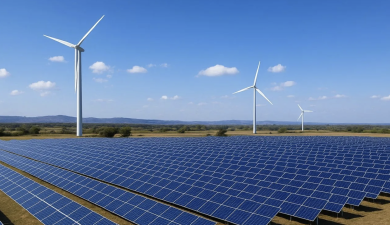
India is projected to become the world’s second-largest solar energy market by 2026. The country aims to expand its solar capacity significantly, positioning itself behind China in global rankings. This growth is driven by government policies and increasing renewable energy investments.
Solar Capacity Expansion Targets
India plans to increase its solar power capacity to over 300 GW by 2030. Current installed solar capacity stands at approximately 70 GW as of 2024. The government’s National Solar Mission and the Renewable Energy Development Agency are key contributors to this expansion.
Policy and Investment Framework
The government has introduced schemes such as the Production Linked Incentive (PLI) for solar manufacturing. Foreign direct investment (FDI) in renewable energy sectors has increased by 15% in the last two years. Public and private sector companies are investing in large-scale solar parks and rooftop solar projects.
Technological and Infrastructure Developments
India is focusing on advanced solar technologies including floating solar plants and solar-wind hybrid systems. Grid integration and energy storage infrastructure are being upgraded to manage intermittent solar power. Several states have launched competitive bidding processes to attract solar developers.
Global Solar Market Context
China currently holds the largest solar market share with over 350 GW installed capacity. The United States and the European Union follow India in solar capacity rankings. India’s solar market growth rate exceeds 20% annually, outpacing most other countries.
What to Study for UPSC Exams?
- Renewable Energy Policies in India
- Global Solar Energy Trends
- Energy Storage Technologies
- Climate Change Mitigation Strategies
Renewable Energy Policies in India
India’s National Solar Mission was launched in 2010 targeting 20 GW by 2022, later revised to 100 GW. The Production Linked Incentive (PLI) scheme supports domestic solar manufacturing. Renewable energy accounts for over 40% of India’s installed power capacity as of 2024.
Global Solar Energy Trends
China leads with 350+ GW installed solar capacity. Floating solar plants are growing globally, especially in Asia. Solar power’s global share of electricity generation reached around 4% by 2023, doubling in five years.
Energy Storage Technologies
Lithium-ion batteries dominate grid-scale storage, with costs dropping 85% since 2010. Flow batteries offer long-duration storage but remain costly. Emerging solid-state batteries promise higher energy density and safety.
Climate Change Mitigation Strategies
Carbon pricing and emission trading schemes are used worldwide to reduce GHGs. Nature-based solutions like reforestation absorb up to 30% of annual CO2 emissions. Renewable energy transition is central to limiting global warming below 2°C.
Last Modified: April 14, 2026