
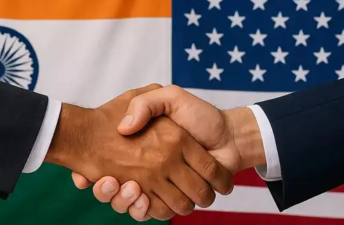
India’s trade strategy has entered a decisive phase. With the conclusion of a consequential trade deal with the United States that lowers tariffs on Indian goods to 18%, New Delhi has reinforced its long-term vision of integrating India deeply into global value chains. This agreement is not an isolated outcome but part of a wider trade architecture aimed at supporting India’s ambition of becoming a developed economy by 2047.
Why the India–U.S. trade deal is significant
The agreement comes after nearly a year of sustained negotiations and quiet diplomacy, reflecting a mature and strategic approach to trade engagement. For Indian exporters, the reduction in U.S. tariffs from elevated levels of up to 50% last year to 18% offers immediate relief, predictability, and renewed competitiveness in the world’s largest import market. For India, it signals growing confidence among major economies in its manufacturing and export potential.
India’s expanding network of trade partnerships
The deal with the United States builds on a rapidly expanding web of trade agreements. India’s arrangements with the European Free Trade Association, the United Kingdom and the European Union have opened preferential access to European markets. Agreements with Australia and New Zealand strengthen India’s presence in the Pacific, while trade pacts with Oman and the United Arab Emirates deepen access to West Asia.
Together, these partnerships position India as a globally integrated trading economy rather than a regionally confined one. The U.S., being India’s largest export destination and accounting for nearly one-fifth of total exports, occupies a central place in this strategy.
Sectoral gains: where the tariff cut matters most
The clearest beneficiaries of the tariff reduction are employment-intensive export sectors. Apparel stands out prominently. The U.S. is the world’s largest apparel import market, and Indian exporters now enjoy a tariff advantage over key competitors such as Vietnam and Bangladesh in several product categories.
Other sectors likely to gain include:
- Gems and jewellery, where thin margins make tariff changes critical
- Marine products and processed foods
- Footwear and leather goods
Lower landed costs enhance export viability, encourage capacity expansion, and support India’s integration into diversified global supply chains.
Competitive positioning in a fragmented global market
At a broader level, the agreement improves India’s relative position vis-à-vis several major exporting economies that continue to face higher U.S. duties, including China, Bangladesh, Sri Lanka, Brazil, South Africa, Pakistan and many ASEAN countries. This relative advantage supports India’s long-term objective of emerging as a global manufacturing hub, especially as companies seek to diversify supply chains away from concentrated geographies.
Beyond tariffs: laying the ground for deeper engagement
Importantly, the deal creates space to advance discussions under the ongoing India–U.S. Bilateral Trade Agreement. By easing immediate tariff frictions, both sides can now focus on more complex issues such as regulatory cooperation, market access barriers, digital trade norms and supply-chain resilience.
The agreement also encourages joint ventures, technology partnerships and investment in high-value sectors, aligning economic cooperation with innovation, skill development and employment generation.
Strategic dimensions of closer economic ties
The economic reset complements broader strategic cooperation between India and United States. Stronger trade ties reinforce collaboration in forums such as the Quadrilateral Security Dialogue, where supply-chain resilience and trusted partnerships are core priorities. A stable and predictable trade relationship strengthens these strategic objectives by anchoring them in shared economic interests.
From tariff relief to long-term trust
More than a short-term adjustment, the trade deal represents a restoration of trust and a strategic recalibration of bilateral ties. It demonstrates how two democracies, through sustained negotiation and alignment of interests, can convert complex trade frictions into durable opportunities. For India, it consolidates its standing as a credible and competitive global economic partner; for the U.S., it underscores the value of engaging India as a pillar of resilient and diversified supply chains.
What to note for Prelims?
- U.S. tariffs on Indian goods reduced to 18%
- U.S. is India’s largest export destination
- Key beneficiary sectors: apparel, gems and jewellery, leather, marine products
- Trade deal complements ongoing India–U.S. BTA talks
What to note for Mains?
- Role of trade agreements in India’s growth and manufacturing strategy
- Impact of tariff reductions on employment-intensive sectors
- Trade policy as a tool for strategic and geopolitical alignment
- Supply-chain diversification and India’s global competitiveness