
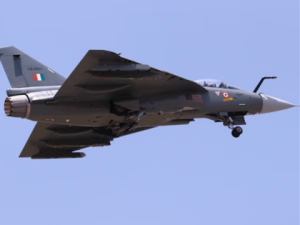
The Indian Air Force (IAF) recently experienced another crash involving its vintage SEPECAT Jaguar fighter-bomber. The incident occurred on 9 July 2025 in Rajasthan’s Churu district, resulting in the loss of both pilots. This marks the third Jaguar crash in India this year, denoting ongoing concerns about the ageing fleet. Despite these challenges, the Jaguar remains a critical part of the IAF’s arsenal and is expected to serve until around 2040.
Historical Background of the SEPECAT Jaguar
The Jaguar was developed in the 1960s as a joint venture between Britain and France, through SEPECAT—a collaboration between Breguet and the British Aircraft Corporation. Initially designed as a jet trainer, it evolved into a supersonic tactical support aircraft capable of nuclear strike roles. The jet first flew in 1968 and was inducted into the IAF in 1979. It was operated by several countries but remains in service only with India .
Technical Specifications and Combat Role
The Jaguar features a conventional swept-wing design and is powered by two Rolls-Royce Turbomeca Adour engines. It carries two 30-mm cannons and has seven hardpoints for rockets, missiles, and bombs. Its top speed is 1.6 Mach with a combat ceiling of 46,000 feet. The aircraft has been deployed in various conflicts, including operations in Iraq, Bosnia, and Pakistan. It serves as India’s primary airborne nuclear delivery platform.
Jaguar’s Service in the Indian Air Force
India signed a $1 billion deal in 1978 to acquire Jaguars, receiving the first batch on loan from the Royal Air Force. HAL produced licensed versions until 2008. India has inducted over 160 Jaguars across variants including the single-seat strike fighter (Jaguar IS), two-seat trainer (Jaguar IB), and naval version (Jaguar IM). Around 115 Jaguars remain in service, undergoing upgrades to extend their operational life.
Reasons for Extended Service Life
The IAF continues to operate the Jaguar due to three main factors. First, delays in indigenous fighter development, especially the HAL Tejas, have limited replacement options. Second, the Jaguar remains effective in its deep penetration and nuclear strike role, with ongoing upgrades such as the DARIN III variant featuring advanced Israeli radars and AIM-9 Sidewinder missiles. Third, the aircraft is cost-effective and easy to maintain, with quick engine change capabilities and a steady supply of spares from decommissioned Jaguars acquired in 2018.
Recent Operational Use and Challenges
Recently, Jaguars were actively used during Operation Sindoor for long-range air-to-air engagements and strikes on enemy air bases. However, the fleet’s ageing engines and manual systems make it prone to failures, posing safety risks as seen in the recent crashes. The IAF’s squadron strength is below sanctioned levels, underscoring the urgent need for newer platforms.
Future Outlook for Jaguar in IAF
Upgrades will keep about 60 Jaguars operational for the next 15 years. The remaining jets are expected to retire by the early 2030s. The IAF’s reliance on the Jaguar reflects broader challenges in defence procurement and indigenous fighter development. Until a reliable replacement emerges, the Jaguar will remain a vital but vulnerable component of India’s air power.
Questions for UPSC:
- Critically discuss the challenges faced by India in indigenous fighter aircraft development and its impact on the Indian Air Force’s operational readiness.
- Analyse the strategic importance of maintaining a nuclear triad, focusing on the role of air-borne delivery systems like the SEPECAT Jaguar.
- Examine the implications of ageing military technology on national security and how defence forces can balance modernization with cost-efficiency.
- Estimate the effects of international defence collaborations on India’s military capabilities and indigenous defence production initiatives.