
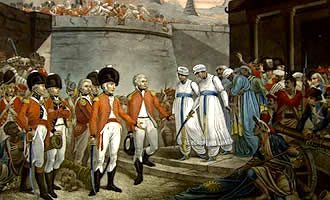

The integration of princely states into India occurred after independence in 1947. At the time, there were over 565 princely states. These states were not legally part of British India. The British had established a system of indirect rule. The states were given a choice to join either India or Pakistan or remain independent.
Historical Context
During British rule, princely states were governed through complex arrangements. The British exercised “Paramountcy” over these states. The Indian Independence Act of 1947 gave these states the option to join either of the new dominions. This situation created a challenge for the newly independent India.
Population and Geography
Princely states constituted about 28% of India’s population and covered approximately 48% of its area. Despite their size and resources, they were not part of British India. This created a unique scenario during the transition to independence.
Significant Princely States
Among the notable princely states were Travancore and Kashmir. Travancore, rich in resources, initially sought independence. However, it eventually joined India on 30 July 1947. Kashmir presented a more complex situation due to its Hindu ruler and Muslim majority.
The Kashmir Dispute
Kashmir’s Maharaja Hari Singh faced pressure from both India and Pakistan. He was offered a standstill agreement by both nations. In 1954, Article 370 was enacted, granting special status to Jammu and Kashmir. This decision has had lasting implications for the region.
Sardar Vallabhbhai Patel’s Role
Sardar Vallabhbhai Patel was the first Deputy Prime Minister and Home Minister of India. He was tasked with integrating the princely states. Patel worked closely with V.P. Menon, the Secretary of the Ministry of States, to negotiate mergers.
Privy Purses
Patel introduced the concept of “Privy Purses.” This was a financial arrangement to incentivise royal families to merge with India. The payments were intended to ease the transition for these states.
Early Integrations
Several states, including Bikaner and Baroda, were among the first to join the Indian Union. Patel’s diplomacy played important role in these early integrations. His approach combined negotiation with strategic incentives.
Resistance and Challenges
Some princely states expressed a desire to join Pakistan or remain independent. The state of Jodhpur, for instance, had a Hindu king but leaned towards Pakistan. This presented a unique challenge for Patel.
Strategic Negotiations
Patel’s negotiations with Jodhpur’s king, Hanvant Singh, were critical. The Pakistani leadership offered him a blank cheque and access to Karachi Port. In response, Patel offered substantial benefits to encourage Jodhpur’s merger with India.
Importance of Jodhpur
Jodhpur was strategically important due to its railway connections. The Kathiawar rail linked it to the Indian mainland. This connection was vital for grain supply during famines, making Jodhpur a key state for integration.
Efforts in Other States
Patel’s efforts extended beyond Jodhpur. He worked tirelessly to integrate other states. His strategies included financial incentives and assurances of political autonomy for royal families.
Impact of Integration
The integration of princely states strengthened India. It consolidated territory and resources. The newly formed state had access to vital economic assets and trade routes.
Legacy of Sardar Patel
Sardar Patel is often referred to as the “Iron Man of India.” His leadership during this period is celebrated for unifying the country. His strategies laid the foundation for a cohesive national identity.
Post-Integration Developments
Following integration, the Government of India focused on development. The newly merged states faced challenges in governance and infrastructure. Efforts were made to integrate their economies with the national framework.
Contemporary Issues
The legacy of princely state integration continues to influence Indian politics. Issues related to autonomy and regional identity occasionally resurface. The historical context remains relevant in contemporary discussions.


