
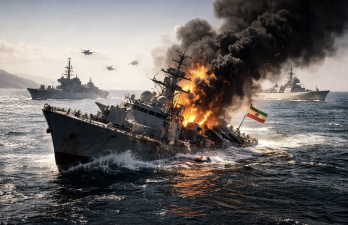
The Iranian frigate IRIS Dena sank off Sri Lanka’s south-west coast in 2026. The ship was returning from major maritime events hosted by India. It was attacked by a US Navy fast attack submarine using a torpedo. Sri Lanka rescued 32 critically wounded sailors from the frigate. These events followed India’s International Fleet Review (IFR) and the MILAN-2026 multilateral exercise.
Indian Navy’s 2026 Maritime Events
India hosted three key maritime events in February 2026 at Visakhapatnam. These included the International Fleet Review (IFR), MILAN-2026 exercise, and the Indian Ocean Naval Symposium (IONS) Conclave of Chiefs. Navies from 74 countries participated with 85 ships, including 19 foreign warships. The events aimed to enhance naval cooperation, maritime domain awareness, and collective security. India showcased indigenous warships like INS Vikrant and Nilgiri-class frigates during the Presidential Fleet Review.
Details of MILAN-2026 and IFR
MILAN-2026 was the 13th edition of the exercise started in 1995. It focused on anti-submarine warfare, air defence, search and rescue, and cooperative security operations. The Harbour and Sea Phases tested complex maritime operations. The IFR showcased naval strength and diplomacy with parades and fleet reviews. The Indian Ocean Naval Symposium gathered naval chiefs to discuss maritime security and humanitarian assistance and disaster relief (HADR).
Incident of IRIS Dena Sinking
IRIS Dena had just completed participation in IFR and MILAN-2026. While returning, it was attacked and sunk by a US Navy submarine. The US Navy destroyer USS Pinckney was scheduled but did not attend due to other duties. A US P-8 aircraft took part in the exercises. Sri Lanka’s rescue operation saved 32 sailors from the frigate. The incident marks rising naval tensions in the Indian Ocean region.
India’s Naval Diplomacy and Security Role
India’s hosting of IFR and MILAN strengthens its role as a maritime security leader. The events promote a free, open, and rules-based sea order. India assumed IONS chairmanship for 2025-2027, focusing on information sharing and maritime safety. The exercises improve interoperability among navies and readiness for multilateral crises. They also showcase India’s indigenous naval technology and strategic ambitions.
Topics for Prelims:
IRIS Dena
- Moudge-class frigate of Iranian Navy
- Sank near Sri Lanka in 2026 after torpedo attack
- Participated in IFR and MILAN-2026 hosted by India
- 32 sailors rescued by Sri Lanka
- Symbol of Iran’s naval presence in Indian Ocean
International Fleet Review (IFR)
- Naval event showcasing fleet strength and diplomacy
- India hosted in 2001, 2016, and 2026
- Involves over 70 countries and multiple warships
- Includes Presidential Fleet Review and parades
- Focuses on maritime cooperation and security
MILAN Exercise
- Multilateral naval exercise started in 1995
- 13th edition held in 2026 at Visakhapatnam
- Focuses on anti-submarine warfare and air defence
- Enhances interoperability among navies
- Promotes cooperative maritime security in Indo-Pacific
Questions for Mains:
- Discuss the strategic significance of India hosting the International Fleet Review and MILAN exercises in strengthening Indo-Pacific maritime security. [GS-II-International Relations]
- Critically examine the implications of naval confrontations such as the sinking of the Iranian frigate IRIS Dena on regional stability in the Indian Ocean. [GS-III-Internal & External Security]
- Explain the role of multilateral naval exercises like MILAN in enhancing interoperability and collective response during maritime crises. With suitable examples, discuss their impact on global maritime governance. [GS-III-Internal & External Security]
- Comment on the importance of indigenous naval technology showcased during India’s International Fleet Review in advancing national security and strategic autonomy. [GS-III-Science & Technology]
Answer Hints:
1. Discuss the strategic significance of India hosting the International Fleet Review and MILAN exercises in strengthening Indo-Pacific maritime security. [GS-II-International Relations]
- India’s IFR and MILAN bring together navies from 70+ countries, encouraging maritime cooperation and trust.
- Enhances interoperability and collective maritime domain awareness in the Indo-Pacific region.
- Showcases India’s leadership role in promoting a free, open, inclusive, and rules-based maritime order.
- Facilitates dialogue on security challenges, HADR, and information sharing among regional navies.
- Strengthens India’s diplomatic ties and strategic partnerships, balancing regional power dynamics.
- Supports capacity building for joint response to threats like piracy, terrorism, and maritime disasters.
2. Critically examine the implications of naval confrontations such as the sinking of the Iranian frigate IRIS Dena on regional stability in the Indian Ocean. [GS-III-Internal & External Security]
- Escalates tensions among regional and extra-regional powers, risking militarization of the Indian Ocean.
- Undermines trust and cooperation promoted by multilateral naval exercises like MILAN and IFR.
- Potentially disrupts maritime trade routes vital for global and regional economies.
- May trigger proxy conflicts or retaliatory actions, destabilizing security architecture.
- Complicates India’s balancing act between US and Iran, affecting diplomatic relations.
- Highlights vulnerabilities in maritime security and need for enhanced surveillance and crisis management.
3. Explain the role of multilateral naval exercises like MILAN in enhancing interoperability and collective response during maritime crises. With suitable examples, discuss their impact on global maritime governance. [GS-III-Internal & External Security]
- MILAN encourages standard operating procedures and communication protocols among diverse navies.
- Exercises focus on anti-submarine warfare, air defence, search and rescue, and cooperative security missions.
- Enhances readiness for coordinated responses to piracy, natural disasters, and humanitarian crises.
- Promotes transparency and confidence-building measures, reducing chances of conflict escalation.
- Supports maritime governance by reinforcing adherence to international laws and norms at sea.
- Example – MILAN-2026 involved 74 countries, improving collective maritime domain awareness in Indo-Pacific.
4. Comment on the importance of indigenous naval technology showcased during India’s International Fleet Review in advancing national security and strategic autonomy. [GS-III-Science & Technology]
- Showcasing platforms like INS Vikrant and Nilgiri-class frigates demonstrates India’s growing self-reliance.
- Indigenous technology reduces dependence on foreign suppliers, enhancing strategic autonomy.
- Boosts domestic defense industry, innovation, and employment.
- Enables tailored solutions to regional maritime security challenges and operational requirements.
- Strengthens deterrence capabilities and projection of naval power in the Indo-Pacific.
- Supports India’s ambition as a blue-water navy and regional security provider.