
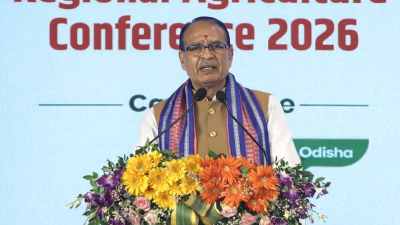
The Indian Council of Agricultural Research (ICAR), under the Department of Agricultural Research and Education, has implemented the nationwide ‘Khet Bachao Abhiyan’ (Save the Field Campaign). This initiative addresses soil degradation, encourages balanced fertilizer applications, and promotes sustainable agricultural practices across India. The campaign has conducted more than 12,900 awareness camps and engaged over 7 lakh farmers. Through training programs, field demonstrations on organic inputs, and digital outreach, the initiative brings together local governance bodies and input dealers to reduce chemical fertilizer overuse and restore long-term soil fertility.
Institutional Framework and Implementation Strategy
Executing Agencies
The campaign operates under the administrative control of the Department of Agricultural Research and Education (DARE) within the Ministry of Agriculture and Farmers Welfare. ICAR coordinates the campaign through its extensive network of Krishi Vigyan Kendras (KVKs), state agricultural universities, and ICAR-affiliated national research institutes.
Grassroots Delivery Network
The field strategy relies on key local stakeholders to ensure adoption:
- Krishi Vigyan Kendras (KVKs): Act as the primary institutional hubs for organizing village-level awareness camps, testing soil samples, and hosting diagnostic field clinics.
- Panchayati Raj Institutions (PRIs): Mobilize local farmer groups, organize community venues, and integrate soil welfare agendas into Gram Panchayat Development Plans.
- Fertilizer Input Dealers: Receive training to act as certified soil health advisors, ensuring they recommend balanced nutrient products instead of promoting over-application.
Core Objectives and Soil Degradation Challenges
Primary Objectives of the Campaign
The campaign aims to reform regular farming habits through specific interventions:
- Reducing Chemical Intensity: Lowering the excess consumption of urea and other high-nitrogen chemical inputs.
- Promoting Bio-fertilizers: Educating farmers on using living microorganisms like Rhizobium, Azotobacter, and Phosphate Solubilizing Bacteria (PSB).
- Enriching Organic Matter: Supporting the use of farmyard manure, vermicompost, and green manuring crops like Dhaincha (Sesbania aculeata).
The Problem of Nutrient Imbalance
India’s agricultural soils suffer from severe macro- and micro-nutrient deficiencies caused by decades of intensive farming. The table below details the ideal versus actual nutrient dynamics:
| Metric / Nutrient | Ideal National Standard | Prevalent Field Situation | Ecological Consequences |
| NPK Consumption Ratio | 4:2:1 (Nitrogen: Phosphorus: Potassium) | Highly skewed, exceeding 6:3:1 in intensive northern agricultural zones | Soil acidification, groundwater nitrate pollution, and drop in crop response ratio |
| Soil Organic Carbon (SOC) | Above 0.5% to 0.75% by weight | Dropped below 0.3% across many intensive crop-rotation belts | Reduced soil water-holding capacity and loss of beneficial soil microbes |
| Secondary & Micro-nutrients | Trace presence of Zinc, Iron, Boron, and Sulphur | Widespread multi-nutrient deficiencies limiting crop yield potential | Micronutrient malnutrition in crops, leading to dietary deficiencies in humans |
Operational Components and Outreach Tools
Field Demonstrations and Capacity Building
The campaign uses hands-on training to convince farmers of alternative methods:
- Frontline Demonstrations (FLDs): KVK scientists grow crops on selected farmer fields using balanced fertilizers alongside a control plot using traditional, chemical-heavy methods to showcase the difference in yield.
- Customized Nutrient Management: Farmers learn to interpret Soil Health Cards, matching fertilizer application strictly to the measured deficiencies of their specific plots.
Digital and Mass Media Integration
To scale the outreach without losing technical accuracy, the campaign uses several media channels:
- Mobile Advisory Services: Short Message Service (SMS) alerts sent through the mKisan portal provide weather-specific and crop-stage-specific nutrient advice.
- Community Radio Stations: KVK-operated radio channels broadcast localized discussions on soil testing and preparation before the sowing season begins.
IASPOINT Booster Facts for UPSC
- Soil Health Card Scheme Linkage: Launched originally in 2015, the Soil Health Card scheme provides farmers with bi-annual statements detailing 12 critical parameters, including macro-nutrients (N, P, K), secondary nutrients (S), micro-nutrients (Zn, Fe, Cu, Mn, B), and physical parameters (pH, Electrical Conductivity, Organic Carbon). The Khet Bachao Abhiyan acts as the field enforcement campaign for these card readings.
- Nitrogen Use Efficiency (NUE): India exhibits a low NUE of approximately 30-35%, meaning over 65% of applied nitrogen fertilizer escapes into the ecosystem via volatilization as greenhouse gases (nitrous oxide) or leaches into water bodies.
- Neem Coated Urea (NCU) Mandate: The central government made 100% production of Neem Coated Urea mandatory to slow down the release of nitrogen into the soil. This policy reduces solubility, curtails chemical wastage, and prevents the illegal diversion of subsidized agricultural urea to industrial units.
- International Year of Soils: The United Nations General Assembly designated 2015 as the International Year of Soils, creating global frameworks that underpin modern Indian conservation campaigns like the Khet Bachao Abhiyan.
- The Crop Response Ratio Drop: Due to progressive soil exhaustion and falling organic matter, India’s crop response ratio to chemical fertilizers has dropped from roughly 13.4 kg of grain per kg of fertilizer in the 1960s to less than 4 kg of grain per kg of fertilizer in recent decades.