
On 26 June 2026 GFZ reported that analysis of over 1,000 microearthquakes has revealed a deeper, slanted magma reservoir beneath Germany’s Lake Laach volcano.
Key Observations
- Slanted magma reservoir: Reservoir tilts toward the Neuwied Basin (Rhine), contradicting prior expectation of a vertical body.
- Seismic concentration: Microseismicity focussed in a narrow fault zone between Ochtendung and Lake Laach.
- Recent earthquakes: On 26 June 2026, M2.2 at 8 km WNW, depth 12.70 km; M2.1 at 17 km NNE, depth 17.00 km.
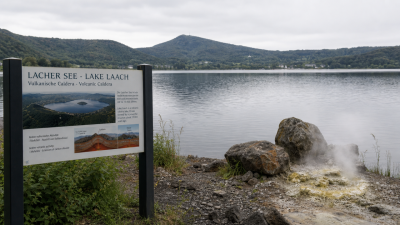
- Outgassing: Mofettes on the eastern shore indicate ongoing gas release and shallow fluid movement.
Data & Methods
- Instrument array: GFZ deployed over 500 sensors and a 64-kilometre fibre-optic cable for dense microseismic detection.
- Resolution: Detection of tiny earthquakes enabled detailed mapping of subsurface geometry and fault localisation.
Volcanic Setting
- Location: Laacher See caldera, Rhineland-Palatinate, within the Eifel volcanic field.
- Last eruption: Occurred about 13,000 years ago; caldera lake formed by that eruption.
- Crustal state: System comprises multiple vents and complex plumbing; current data indicate active crustal processes but do not confirm imminent eruption.
IASPOINT Booster Facts
- Mofette: CO2-dominant gas emission from cooling volcanic systems; used as indicator of hydrothermal activity.
- Caldera: Collapse structure formed after large-volume eruption; Laacher See occupies such a collapse.
- GFZ Helmholtz Centre: Germany’s national geoscience research centre; conducts seismic and geophysical investigations.