
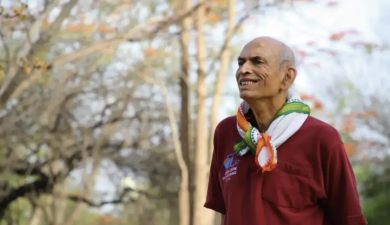
Madhav Dhananjaya Gadgil, one of India’s most influential ecologists, died in Pune on 7 January 2026 after a brief illness. He was 82. He was known for shaping ecological research, biodiversity policy, and environmental planning in India. His work linked science with conservation and community rights.
Who Was Madhav Gadgil
Madhav Gadgil was an ecologist, academic, writer, and columnist. Born in Pune on 24 May 1942, he studied biology at Fergusson College, zoology at Mumbai University, and later earned a PhD in mathematical ecology from Harvard University. He spent over three decades at the Indian Institute of Science, Bengaluru, where he founded the Centre for Ecological Sciences.
Major Scientific Contributions
Gadgil was a leading figure in quantitative ecology and animal behaviour studies in India. He helped establish the Nilgiri Biosphere Reserve in 1986, India’s first biosphere reserve. His research stressed that humans are part of ecosystems and that conservation must include local communities. He authored more than 250 scientific articles and several books on ecology, biodiversity, and environmental governance.
Western Ghats Ecology Expert Panel
In 2010, Gadgil chaired the Western Ghats Ecology Expert Panel, widely known as the Gadgil Commission. The panel recommended that 64% of the Western Ghats be declared Ecologically Sensitive Areas. The report became a major reference point in debates on development, conservation, and environmental regulation in one of India’s most fragile biodiversity regions.
Policy Legacy and Recognition
Gadgil contributed to the Biological Diversity Act, 2002, and helped develop People’s Biodiversity Registers. He also served on the Scientific Advisory Council to the Prime Minister. His honours included the Padma Shri, Padma Bhushan, Shanti Swarup Bhatnagar Prize, and the United Nations Champions of the Earth Award. His work remains central to India’s environmental policy and conservation discourse.
Last Modified: April 25, 2026