
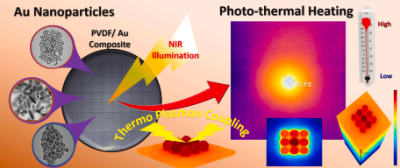
Scientists at the Institute of Nano Science and Technology (INST), Mohali, an autonomous institute under the Department of Science and Technology (DST), have developed ultrathin, flexible films embedded with nano-gold particles. These films convert small ambient temperature changes into usable electrical signals. The fabrication utilizes a combination of polyvinylidene fluoride (PVDF) polymer and hexagonal nano-gold particles. This development enables the creation of self-powered sensors and wearable electronic devices that harvest energy from routine environmental thermal fluctuations without requiring external batteries.
Understanding Pyroelectricity and the New Technology
The Pyroelectric Effect
Pyroelectricity is the property of certain polar materials to generate a temporary electrical voltage when they are heated or cooled. The change in temperature modifies the positions of atoms slightly within the crystal structure, altering the polarization of the material. This movement creates an electrical potential difference across the material.
Role of PVDF and Nano-Gold
Polyvinylidene fluoride (PVDF) is a synthetic fluoropolymer known for its strong piezoelectric and pyroelectric properties. In this research, scientists embedded hexagonal-shaped gold nanoparticles into the PVDF matrix. The introduction of these specific geometric nanoparticles enhances the alignment of the polymer’s polar phases. This structural improvement increases the material’s overall thermal-to-electrical energy conversion efficiency.
Key Mechanisms and Performance Parameters
Energy Harvesting Range
The engineered films operate efficiently within a temperature range of 294 Kelvin to 301 Kelvin (approximately 21°C to 28°C). This specific window matches standard ambient and human body temperature variations, making the material highly responsive to everyday thermal shifts.
Plasmonic Material Integration
Gold nanoparticles act as plasmonic materials. When thermal energy interacts with these localized metallic structures, it enhances heat localization within the polymer matrix. This localized thermal gradient speeds up the polarization change in the PVDF, resulting in a higher electrical output compared to standard, non-embedded PVDF films.
Core Applications of Flexible Pyroelectric Films
Wearable Electronics and Health Monitors
The flexibility and thickness of the films allow them to be integrated directly into clothing or skin patches. They can monitor physiological parameters, such as respiration rates or skin temperature changes, by converting body heat fluctuations into diagnostic electrical signals.
Self-Powered Environmental Sensors
These films can operate autonomous sensors in remote areas. By generating their own power from the natural day-to-night temperature cycles, the sensors eliminate the logistical need for battery replacements in environmental monitoring networks.
Smart Device Integration
The material can be applied as a thermal energy-harvesting layer in consumer electronics, utilizing waste heat generated by internal components to supplement power requirements.
Technical Specifications and Comparison
| Parameter | Standard PVDF Film | Nano-Gold Embedded PVDF Film |
| Flexibility | Moderate | High (Ultrathin) |
| Primary Mechanism | Pure Pyroelectric | Plasmonic-Enhanced Pyroelectric |
| Optimal Thermal Range | Requires high gradients | 294 K – 301 K (Low gradients) |
| Polar Phase Alignment | Unaligned/Random | Highly Ordered Polar Phases |
| Power Source Requirement | External power often needed | Completely Self-Powered |
IASPOINT Booster Facts for UPSC
- Institute of Nano Science and Technology (INST): Located in Mohali, Punjab, it is an autonomous institution established under the Nano Mission of the Department of Science and Technology (DST), Government of India.
- The Nano Mission: Launched by the Government of India in 2007 as an umbrella capacity-building program to promote research and development in nanotechnology.
- Pyroelectricity vs. Piezoelectricity: Pyroelectric materials generate electricity from temperature changes, whereas piezoelectric materials generate electricity from mechanical stress or pressure. All pyroelectric materials are piezoelectric, but not all piezoelectric materials are pyroelectric.
- Kelvin to Celsius Conversion: The operational range of 294 K–301 K is calculated using the formula °C = K – 273.15.
- Polyvinylidene Fluoride (PVDF) Properties: It is a highly non-reactive thermoplastic fluoropolymer. Beyond electronics, it is widely used in membranes for medical filtration, lithium-ion battery separators, and chemical processing components.