
A month ago, NASA welcomed pristine samples from an asteroid, safely tucked inside a protective canister. These invaluable samples were collected during the OSIRIS-REx mission, the first US mission to gather materials from asteroid Bennu. However, NASA’s curation team has faced a unique challenge while trying to access these samples.
The Perplexing TAGSAM Head
The core of the issue lies with the TAGSAM, or the Touch-and-Go Sample Acquisition Mechanism, head. This mechanism was responsible for gathering the asteroid samples and preserving them for their journey back to Earth. The curation team, based at NASA’s Johnson Space Center, has been diligently working on opening the TAGSAM head, but it’s been no easy task.
Delicate Handling in a Glovebox
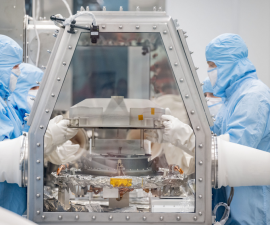
To ensure the samples remain uncontaminated, the team has been handling the TAGSAM head with great care. They use a specialized glovebox, which maintains a nitrogen atmosphere to prevent any foreign particles from affecting the samples.
Tool Troubles
Despite multiple attempts to remove the TAGSAM head, the team has encountered a significant challenge. They found that two out of the 35 fasteners on the head could not be removed using the tools approved for use in the OSIRIS-REx glovebox. In response, the team has been actively working on devising new approaches to safely access the materials stored inside the head while ensuring the samples’ preservation.
Discovery of Debris
Upon successfully removing the aluminum lid from the canister, the team was met with an unexpected discovery. They found black dust and debris on the avionics deck, indicating potential issues with the sample containment. On October 11, 2023, NASA disclosed that they managed to extract the first sample from TAGSAM’s outer covering. However, the challenge still remains as the sample canister itself remains unopened.
Careful Extraction with Tweezers
To address this hurdle, the curation team resorted to using tweezers to cautiously remove some material from inside the canisters. NASA emphasized that any tools or procedures considered for extracting the remaining material must fit within the glovebox’s constraints and maintain the scientific integrity of the collection, adhering to clean room standards.
A Bounty of Asteroid Samples
In spite of the complications, NASA has already exceeded its mission goal. Originally aiming to gather 60 grams of asteroid debris, the space agency has managed to recover an impressive 70.3 grams of rocks and dust. Additionally, the samples have revealed the presence of abundant carbon and water molecules, offering exciting scientific potential.
A Recap of the OSIRIS-REx Mission
The OSIRIS-REx mission, launched in September 2016, arrived at asteroid Bennu in December 2018. After landing on Bennu’s surface in October 2020, the spacecraft returned to Earth and deposited the asteroid sample in the Utah desert on September 24, 2023. Despite the temporary setback, the mission’s initial findings from the asteroid samples hold great promise.
Last Modified: February 22, 2024