
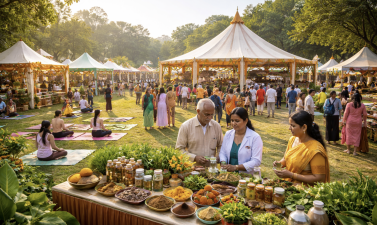
The Ministry of Ayush is set to organise the four-day National Arogya Fair 2026 from February 25 to 28 in Shegaon, Maharashtra. Conceived as a mega outreach platform, the event seeks to promote traditional systems of medicine while simultaneously creating livelihood opportunities for farmers through medicinal plant cultivation and agroforestry.
The fair will be inaugurated by the President of India, Droupadi Murmu, in the presence of Maharashtra Governor and Union Minister of Ayush Prataprao Jadhav at the Visava Maidan of Sant Gajanan Maharaj Sansthan in Shegaon.
Why Shegaon and Why Now?
4
Shegaon, located in Buldhana district of Maharashtra, is a major pilgrimage centre and draws thousands of visitors annually. Hosting the fair in such a spiritual hub aligns with the ethos of holistic health that underpins Ayush systems.
The event comes at a time when India is actively positioning traditional medicine within public health and global wellness diplomacy frameworks, strengthening institutional support under the Ministry of Ayush.
What Will the Fair Offer to Citizens?
The National Arogya Fair will provide free health check-ups, consultations and medicines across all recognised Ayush streams, including:
- Ayurveda
- Yoga & Naturopathy
- Unani
- Siddha
- Sowa Rigpa
- Homoeopathy
Visitors can participate in yoga demonstrations, live therapy counters, thematic exhibitions, expert lectures, and interactive sessions focused on preventive and promotive healthcare. Pharmaceutical and wellness companies will showcase good manufacturing practices, quality standards, and research developments in the Ayush sector.
A dedicated exhibition of medicinal plants and home-based remedies will also educate the public about everyday natural healthcare practices.
Medicinal Plant Cultivation: A New Income Avenue for Farmers
A key highlight is the special outreach to farmers from Buldhana and neighbouring districts. On February 27, a focused programme on “Ayurvedic Farming, Production and Marketing” will guide farmers on:
- Cultivation techniques for medicinal and forest-based crops.
- Processing and value addition methods.
- Marketing strategies within the Ayush value chain.
The initiative encourages agroforestry and partial diversification of farmland towards medicinal plants. The objective is to ensure sustainable and remunerative income while reducing ecological stress from monoculture farming.
Institutional Context: Ayush in India’s Health Architecture
Ayush systems form an important complementary pillar in India’s healthcare framework. Over the years, policy initiatives have aimed to:
- Mainstream traditional medicine in primary healthcare.
- Standardise education and research in Ayush disciplines.
- Promote medicinal plant cultivation under the National Medicinal Plants Board.
- Enhance global outreach through wellness diplomacy.
By combining healthcare services with agricultural diversification, the fair reflects a convergence of health policy and rural economic strategy.
Economic and Social Significance
The twin objectives of the fair are clear:
- Enhancing access to affordable and preventive healthcare.
- Strengthening rural livelihoods through medicinal plant-based agriculture.
This model integrates health awareness, employment generation, and value-chain development — potentially linking farmers, self-help groups, small enterprises, and pharmaceutical companies within a single ecosystem.
What to Note for Prelims?
- Location: Shegaon, Buldhana district, Maharashtra.
- Organisers: Ministry of Ayush and All India Ayurvedic Congress.
- Ayush streams: Ayurveda, Yoga & Naturopathy, Unani, Siddha, Sowa Rigpa, Homoeopathy.
- Concept of agroforestry and medicinal plant cultivation.
What to Note for Mains?
- Role of traditional medicine in India’s public health system.
- Integration of agriculture diversification with healthcare value chains.
- Economic potential of medicinal plants for rural livelihoods.
- Preventive healthcare and sustainable development linkages.