
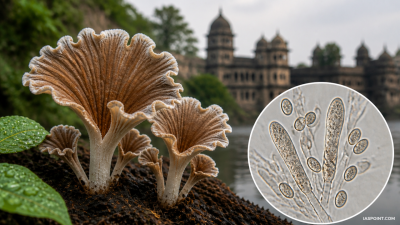
A new polypore fungus, Microporellus kolhapurensis, was recorded on rotting wood in Bhudargad taluka (Bediv–Ajra border), Kolhapur district on 27 July 2026.
Discovery & Taxonomy
- Species name: Microporellus kolhapurensis — specific epithet refers to Kolhapur.
- Group: Polypore (bracket) fungi that produce a porous hymenial surface on wood.
- Genus size: Microporellus comprises about 36 recognised species worldwide.
Habitat & Ecology
- Substrate: Collected from decaying wood; typical saprotrophic substrate for wood‑decay fungi.
- Feeding mode: Saprotrophic — obtains nutrients by decomposing dead plant material, aiding nutrient cycling.
- Occurrence: Ground‑growing/wood‑decaying habit observed in forested or wooded patches.
Morphology & Diagnostic Characters
- Fruiting body: Yellowish‑orange to greyish‑brown, umbrella‑shaped with a lateral stipe.
- Hymenium: Large pores on the underside; pore structure used in identification.
- Microscopic traits: Tear‑drop (subfusiform) spores and thick‑walled cystidia cited as taxonomic characters.
Publication & Regional Record
- Journal: Description published in Nelumbo (Botanical Survey of India journal).
- State record: Prior to this, Microporellus obovatus was the only Microporellus species reported from Maharashtra.
IASPOINT Booster Facts
- Taxonomic practice: New fungal species descriptions standardly include habitat, macroscopic habit, pore structure, spore morphology and cystidia.
- Saprotrophs in ecosystems: Wood‑decay fungi are primary agents of lignocellulose decomposition in forests.