
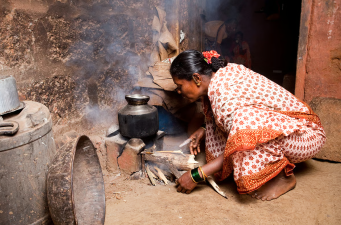
NFHS‑6 (2023–24) omitted the household clean cooking fuel indicator, creating an information gap for assessing Pradhan Mantri Ujjwala Yojana (PMUY) outcomes amid early‑2026 LPG supply constraints from maritime bottlenecks.
Implications for Scheme Monitoring
- PMUY Assessment: Absence of NFHS‑6 field data prevents independent measurement of sustained LPG adoption versus reversion to biomass.
- MPI Measurement: “Cooking fuel” is a standard of living indicator in the global MPI; missing data forces reliance on NFHS‑5 (2019–21) baseline.
Baseline Evidence from NFHS‑5
- Primary Use Rate: NFHS‑5 recorded 58.6% of households using clean cooking fuel as the primary source.
- Fuel Stacking: Many households retain biomass (firewood, dung, crop residues) alongside LPG for primary cooking.
Supply and Systemic Vulnerabilities
- Import Dependence: India imports over 60% of domestic LPG requirements.
- Chokepoint Exposure: About 92% of LPG imports transit the Strait of Hormuz.
- Commercial Buffers: Domestic commercial LPG buffers are reported at roughly 1.5–2 days of supply.
- Electrification Context: Basic household electrification is at 98.3% (NFHS‑6 reported figure).
Alternative Pathways
- Decentralised Biogas: Household and community biogas converts livestock and organic waste to methane for cooking.
- Electric Cooking: Induction and efficient e‑cooking reduce reliance on imported LPG in urban/peri‑urban areas.
IASPOINT Booster Facts
- NFHS Coordination: MoHFW is nodal agency; IIPS, Mumbai, is the coordinating body for NFHS.
- PMUY: Launched May 2016 to provide deposit‑free LPG connections to women from BPL households; over 105 million connections issued.
- MPI Weighting: In the UNDP/OPHI MPI, the cooking fuel indicator carries a weight of 1/18 of the overall index.
- Fuel Stacking (term): Concurrent use of modern and traditional fuels rather than full substitution.