
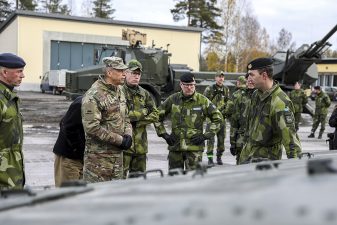
The ongoing conflict in Ukraine has prompted Nordic countries to enhance their war preparedness. Sweden, Finland, Norway, and Denmark are urging citizens to stockpile essentials and prepare for crises. This shift marks change in security policy for these nations, reflecting heightened fears of military conflict in Europe.
Sweden’s Preparedness Initiatives
Sweden has shifted from a policy of military non-alignment to joining NATO. The Swedish Civil Contingencies Agency (MSB) has distributed millions of pamphlets titled “If Crisis or War Comes.” This updated 32-page booklet provides practical advice on emergency preparedness. It encourages citizens to stockpile non-perishable food, water, and medicines. The emphasis on military conflict and cyber threats is notably stronger than in previous editions.
Finland’s Digital Approach
Finland shares a long border with Russia and has launched a digital preparedness website. This platform offers information on how to respond to various crises, including military attacks. The Finnish government marks its self-defence capabilities and provides resources in multiple languages to ensure comprehensive understanding among citizens.
Norway and Denmark’s Strategies
Norway has also engaged in crisis preparedness by sending pamphlets to households. These materials cover extreme weather, war, and other threats, advising on necessary supplies like long-life food and iodine tablets. Denmark has taken a digital approach, emailing citizens with detailed advice on preparing for emergencies that may last up to three days.
Broader Context of Preparedness
The heightened focus on preparedness is a direct response to the war in Ukraine. Nordic nations are adapting their civil defence strategies to address the changing security landscape. This includes preparing for potential military conflicts that could spill over into Northern Europe.
Public Reaction and Mental Readiness
Public responses to these initiatives have varied. Some citizens express concern while others call for mental readiness for potential conflict. Former army chief Micael Byden has emphasised the need for citizens to confront the reality of the geopolitical situation.
Technological and Cyber Threats
The rise of hybrid warfare has introduced new challenges. Cyber-attacks and other forms of sabotage are increasingly common. Nordic nations are aware of these threats and are working to boost their cyber defence capabilities. The interconnected nature of modern technology makes these infrastructures vulnerable.
Conclusion on Preparedness Measures
Nordic countries are taking proactive measures to ensure their populations are prepared for various emergencies. Their strategies encompass military conflict, natural disasters, and cyber threats. The emphasis on resilience and crisis management reflects shift in public policy and national security.
Questions for UPSC:
- Analyse the implications of hybrid warfare on national security strategies in Europe.
- Critically discuss the role of public awareness in crisis preparedness among Nordic nations.
- Examine the impact of the Ukraine conflict on the military policies of Sweden and Finland.
- Point out the significance of technological advancements in modern warfare and their effects on civilian infrastructure.
Answer Hints:
1. Analyse the implications of hybrid warfare on national security strategies in Europe.
- Hybrid warfare combines conventional military tactics with cyber attacks, disinformation, and sabotage, complicating national security responses.
- European nations are increasingly focused on improving cyber defenses and intelligence sharing to counter these multifaceted threats.
- Hybrid warfare blurs the lines between war and peace, making it difficult to determine appropriate responses to provocations.
- Countries are investing in resilience strategies, including public awareness and preparedness campaigns to mitigate the impact of hybrid threats.
- The shift in focus towards hybrid warfare has led to a reevaluation of military alliances and defense spending across Europe.
2. Critically discuss the role of public awareness in crisis preparedness among Nordic nations.
- Public awareness campaigns educate citizens on emergency preparedness, encouraging a culture of resilience and readiness.
- Pamphlets and digital resources highlight practical steps, such as stockpiling essentials, to empower individuals during crises.
- Informed citizens can better respond to emergencies, reducing panic and ensuring community cooperation in crisis situations.
- Nordic governments utilize public awareness to reinforce national security policies and enhance civil defense strategies.
- Public engagement helps build trust between citizens and authorities, crucial for effective crisis management and response.
3. Examine the impact of the Ukraine conflict on the military policies of Sweden and Finland.
- The Ukraine conflict has prompted Sweden and Finland to abandon military non-alignment, pursuing NATO membership for collective security.
- Both nations are increasing defense budgets and military readiness in response to perceived threats from Russia.
- Sweden’s and Finland’s military policies now emphasize preparedness for hybrid warfare, including cyber threats and misinformation campaigns.
- Joint military exercises with NATO allies have become more frequent, enhancing interoperability and deterrence capabilities.
- The conflict has led to a public discourse on national security, influencing political agendas and military investments in both countries.
4. Point out the significance of technological advancements in modern warfare and their effects on civilian infrastructure.
- Technological advancements enable sophisticated cyber attacks that can disrupt critical civilian infrastructure, such as water and energy systems.
- Modern warfare increasingly relies on drones and automated systems, raising concerns about civilian safety and collateral damage.
- Cyber warfare can be executed with plausible deniability, complicating responses and accountability for attacks on civilian targets.
- Investment in cybersecurity is essential to protect infrastructure from hybrid threats, necessitating collaboration between governments and private sectors.
- Technological advancements also facilitate rapid dissemination of disinformation, impacting public perception and societal stability during conflicts.