
Daily Activities

UPSC Prelims Current Affairs

UPSC Mains Current Affairs

Current Affairs

Pseudocapritermes novus Termite Discovery

Pseudocapritermes novus Termite Discovery

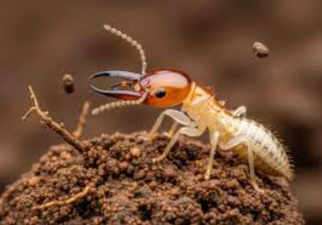
Researchers from the Zoological Survey of India (ZSI) recently discovered a new soil-dwelling termite species, Pseudocapritermes novus, in the Chapramari Wildlife Sanctuary located in the Jalpaiguri district of West Bengal. The discovery, detailed in a prominent taxonomic journal, relied on both morphological evaluation and DNA barcoding of the cytochrome oxidase subunit I (COI) gene. This finding marks a critical addition to India’s soil fauna, raising the total number of recognized Pseudocapritermes species in the country to five. The discovery emphasizes the rich, unexplored biodiversity of the Northeast Hills and Duars region.

Taxonomic Classification and Distribution

Pseudocapritermes novus belongs to the Termitidae family, which is the largest termite family globally.

Genus Characteristics

The genus Pseudocapritermes is predominantly found in the Indo-Malayan region. Before this discovery, India hosted four known species under this genus, distributed across the Western Ghats and the North-Eastern states.

Geographic Habitat

The new species was collected from the forest litter of Chapramari Wildlife Sanctuary. This sanctuary is an extension of the Gorumara National Park and is bounded by the Murti and Jaldhaka rivers, providing a humid, organic-rich soil profile ideal for soil-feeding termites.

Distinctive Morphological Features

The identification of Pseudocapritermes novus hinges on distinct physical variations in its soldier caste, which separates it from its closest relative, Pseudocapritermes fletcheri.

Mandibular Asymmetry

The species possesses asymmetrical snapping mandibles (jaws). The left mandible is twisted and adapted for a rapid execution mechanism, while the right mandible acts as a blade-like anchor.

Head and Fontanelle Structure

The soldier caste features a rectangular, densely hairy head capsule. It has a distinct fontanelle (a frontal gland pore used to secrete defensive chemicals) positioned on the upper third of the head, a structural marker missing or altered in allied species.

Labrum Variations

The labrum (upper lip) shows a deeply concave anterior margin with elongated, pointed lateral tips, a specific diagnostic feature that prevents inter-breeding and indicates a long-standing evolutionary divergence.

Ecological Role and Behavioral Mechanisms

Soil-dwelling termites like Pseudocapritermes novus act as ecosystem engineers within tropical forest dynamics.

Soil Health and Nutrient Cycling

These termites ingest decomposed leaf litter, humus, and soil minerals. Through digestion, they break down complex organic polymers, fixing nitrogen and altering the mechanical structure of the soil. This process increases soil porosity, enhances water infiltration, and mixes topsoil layers.

Snapping Defense Mechanism

The asymmetrical jaws are used for a specialized mechanical defense called snapping. The termite presses the mandibles together to build up elastic strain energy. When released, the jaws strike out at extreme speeds. This action delivers a high-impact blow to predators like ants and generates acoustic signals for nest communication.

Comparative Profile of Indian Pseudocapritermes Species

Species NamePrimary Distribution in IndiaKey Diagnostic Feature
Pseudocapritermes novusChapramari, West BengalDeeply concave labrum, dense head hair, distinct fontanelle position
Pseudocapritermes fletcheriWestern Ghats (Kerala, Tamil Nadu)Moderately asymmetrical mandibles, sparse head hair
Pseudocapritermes fontanellusWestern GhatsLarge, prominent fontanelle tube
Pseudocapritermes roonwaliNorth-East IndiaElongated head capsule, straight lateral margins
Pseudocapritermes tikadariAndaman and Nicobar IslandsShort, stout mandibles with minimal curvature

IASPOINT Booster Facts for UPSC

  • ZSI Identity: The Zoological Survey of India, established in 1916, is a premier premier organization under the Ministry of Environment, Forest and Climate Change (MoEFCC) mandated to survey, explore, and research faunal diversity.
  • Chapramari Status: Chapramari was declared a national wildlife sanctuary in 1998. It is famous for its megafauna like the Asian Elephant and Indian Bison (Gaur).
  • DNA Barcoding: This method uses a short genetic sequence from a standard part of the genome (the mitochondrial COI gene for animals) to identify a specimen to a specific species.
  • Eusociality: Termites are completely eusocial insects, characterized by cooperative brood care, overlapping generations, and a strict caste system divided into reproductive pairs (king and queen), soldiers, and workers.
Last Modified: June 11, 2026

Leave a Reply

Your email address will not be published. Required fields are marked *

Archives