
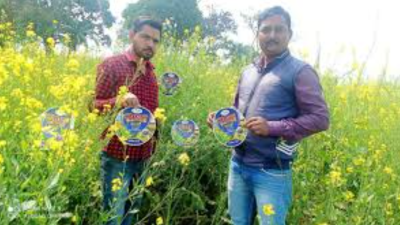
India will initiate large-scale cultivation of Imidazolinone-resistant (IMI-resistant) mustard hybrids during the 2026-27 rabi season. This policy rollout primarily addresses the widespread infestation of Orobanche aegyptiaca (commonly known as broomrape), a destructive root parasitic weed that causes extensive output declines in major mustard-growing states like Rajasthan, Haryana, and Madhya Pradesh. By deploying this agricultural technology, the central government aims to boost domestic oilseed production and reduce the national edible oil import bill, which stood at nearly ₹1.6 lakh crore in the 2024-25 fiscal year.
Biological Profile of the Orobanche Menace
Orobanche presents unique challenges for conventional weed management due to its subterranean growth cycle and high reproductive rate.
Parasitic Mechanism
The weed lacks chlorophyll and cannot perform photosynthesis. It survives as a holoparasite by producing specialized root structures called haustoria, which penetrate the root system of the host mustard plant. Orobanche functions as a nutrient sink, extracting water, carbon, and essential minerals directly from the host. This process causes severe stunting, wilting, and yield losses ranging from 20% to 50%.
Propagation and Soil Persistence
A single Orobanche shoot can produce up to 45 flowers, releasing nearly 5,000 microscopic seeds that disperse rapidly via wind and irrigation water. These seeds can remain dormant and viable within the soil seed bank for up to 20 years. Germination is triggered underground by chemical compounds called strigolactones exuded by the host plant’s roots, typically coinciding with the first seasonal crop irrigation 25 to 30 days after sowing.
Scientific Basis of IMI-Resistance
The newly introduced mustard hybrids utilize specific biochemical modifications to enable selective chemical weeding.
Mutation Breeding Versus Genetic Modification
Unlike transgenic crops such as Dhara Mustard Hybrid-11 (DMH-11)—which relies on the alien barnase-barstar gene system from the soil bacterium Bacillus amyloliquefaciens—these IMI-resistant hybrids are developed through conventional mutation breeding. Scientists identify and isolate naturally occurring or induced single nucleotide substitutions within the plant’s existing genome, exempting these varieties from the stringent environmental clearance protocols applied to Genetically Modified (GM) organisms.
Target Enzyme Alteration
- Standard Mechanism: Imidazolinone class herbicides (such as imazethapyr or imazamox) normally bind to and inhibit the Acetolactate Synthase (ALS) enzyme, also called Acetohydroxyacid Synthase (AHAS). This enzyme is vital for synthesizing branched-chain amino acids (valine, leucine, and isoleucine) necessary for plant survival.
- Resistant Structure: The structural DNA mutation in the new hybrids alters the binding site of the ALS enzyme. When the herbicide is applied, it cannot bind to the modified crop enzyme, allowing the mustard plant to survive while the surrounding Orobanche weeds absorb the chemical and die.
Comparative Analysis: Indian Mustard Technologies
The regulatory and scientific approaches to modern Indian mustard varieties differ across key operational parameters.
| Parameter | IMI-Resistant Mustard Hybrids | GM Mustard (DMH-11) |
| Breeding Methodology | Non-GM Mutation Breeding | Transgenic Genetic Modification |
| Primary Objective | Targeted Orobanche weed control | Heterosis (Exploiting hybrid vigor for high yield) |
| Genetic Component | Endogenous mutated ALS/AHAS gene | Alien barnase, barstar, and bar genes |
| Herbicide Association | Imidazolinones (e.g., Imazamox) | Glufosinate-ammonium (Basta) |
| Regulatory Category | Conventional non-transgenic hybrid | Genetically Engineered Organism (GEAC regulated) |
Ecological Risks and Sustainability Protocols
Agronomists warn against an exclusive reliance on chemical weeding, which can trigger rapid weed adaptation and ecological imbalances.
Superweed Evolution
Continuous, single-herbicide application creates intense selection pressure. Random, naturally resistant Orobanche biotypes can survive the chemical treatment, reproduce, and eventually dominate the field, rendering the IMI herbicide ineffective.
Integrated Weed Management (IWM) Framework
To extend the utility of the technology, the Indian Council of Agricultural Research (ICAR) recommends an integrated approach combining multiple control methods:
- Crop Rotation: Alternating mustard with non-host crops like wheat, barley, or chickpea to interrupt the germination cycle of the parasite.
- Herbicide Rotation: Utilizing alternative chemical classes, such as low-dose directed foliar sprays of glyphosate, alongside IMI applications.
- Trap Cropping: Planting false host crops that stimulate Orobanche germination but do not support its development, reducing the viable soil seed bank.
- Manual and Mechanical Extraction: Manually pulling out surviving mature Orobanche spikes before they can flower and release new seeds.
IASPOINT Booster Facts for UPSC
- Edible Oil Deficit: India satisfies nearly 55% to 60% of its annual edible oil demand through imports, primarily purchasing palm oil from Indonesia and Malaysia, and soybean oil from Argentina and Brazil.
- Regulatory Body: While non-GM mutant varieties bypass transgenic clearances, any eventual commercial release of actual transgenic lines requires statutory approval from the Genetic Engineering Appraisal Committee (GEAC) under the Ministry of Environment, Forest and Climate Change.
- Statutory Basis: The protection of new plant varieties developed via mutation breeding is governed by the Protection of Plant Varieties and Farmers’ Rights (PPV&FR) Act, 2001.
- Primary Crop Zone: Indian Mustard (Brassica juncea) is a major rabi oilseed crop accounting for over 40% of India’s total indigenous oilseed production, concentrated within the semi-arid tracts of the Indo-Gangetic plains.
- International Precedent: Commercial IMI-tolerant crops are globally marketed under the “Clearfield” brand ecosystem, which has been utilized in canola, wheat, and sunflower cultivation across North America and Europe since the late 20th century.
