
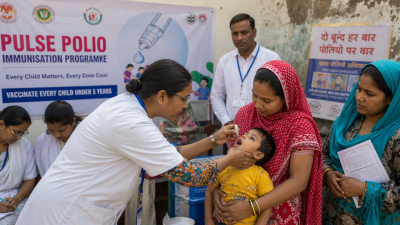
Multiple Indian states conducted Pulse Polio immunisation drives on 28–30 June 2026 targeting children under five, combining booth vaccination, transit/mobile booths and house-to-house mop-ups.
Key features of 2026 drives
- Target group: children below five years (0–59 months).
- Vaccine: bivalent Oral Polio Vaccine (bOPV) used in mass rounds.
- Modality: fixed booths followed by door-to-door mop-up; transit, mobile and special booths used at high-traffic sites.
State-level operational data
- Gujarat: target >83 lakh children with deployment of thousands of booths and field staff.
- Kerala: target 19.8 lakh; 22,288 booths; 46,663 volunteers; transit/mobile/special booths at festival venues.
- Jharkhand: target 61.26 lakh; 24,507 booths; house-to-house visits including >5 lakh children in Ranchi district.
- Nagaland: target 1.43 lakh; ~2,400 booths; door-to-door mop-up after booth day; last polio case in state 1997.
- Telangana: target ~40.97 lakh; 52.04 lakh bOPV doses supplied; mobilisation of ANMs, ASHAs and Anganwadi workers.
- Karnataka: target ~62 lakh; 36,076 booths; 988 mobile teams; 1,14,213 vaccinators.
- Other: targeted drives and subsequent house-to-house rounds reported from Chandigarh, Manipur (Kamjong) and Wokha (Nagaland).
IASPOINT Booster Facts
- WHO status: India declared polio-free by WHO in 2014 after interruption of wild poliovirus transmission.
- bOPV composition: contains attenuated poliovirus types 1 and 3.
- IPPI: Intensified Pulse Polio Immunization denotes focused mop-up in high-risk pockets.
- Surveillance: acute flaccid paralysis (AFP) surveillance and environmental sewage testing are routine polio surveillance tools.
- Global body: Global Polio Eradication Initiative (WHO-led partnership) guides eradication strategies.