
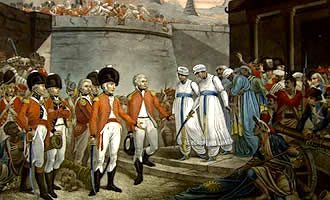

In 1858, the British Crown assumed control over India. This marked shift in governance. The British aimed to prevent further revolts, particularly after the 1857 uprising. About the military’s role was crucial to maintaining power. The reorganisation of the Indian Army was a key strategy.
Changes in the Indian Army
The Indian Army underwent substantial restructuring post-1858. The British sought to ensure European dominance. This was vital to suppress any potential revolts. The following measures were implemented:
- European Dominance: The ratio of Europeans to Indians was fixed. In the Bengal Army, it was set at 1:2. In Madras and Bombay, it was 2:5.
- Strategic Placement: European troops were stationed in key military locations.
- Exclusive Branches: Important units like artillery were manned solely by Europeans.
- Officer Exclusion: Indians were barred from high-ranking officer positions until 1914.
Recruitment Policies
Recruitment policies were designed to maintain control. The British employed a strategy of “divide and rule”. This involved:
- Caste and Regional Discrimination: Recruitment was influenced by caste, region, and religion.
- Martial Classes: Indians were categorised into “martial” and “non-martial” classes.
- Mixed Regiments: Regiments were composed of various castes to prevent unity.
Isolation from Nationalism
The British aimed to isolate the army from nationalist thoughts. They implemented several measures:
- Control of Information: Newspapers and journals promoting nationalism were banned.
- Encouraging Loyalties: Communal and regional loyalties were promoted among soldiers.
Despite these efforts, nationalist sentiments grew within the army. Sections of the army eventually supported the independence movement.
Financial Burden of the Army
The Indian Army became a costly entity. By 1904, it consumed 52% of Indian revenues. The army served multiple purposes:
- Defence: It protected British interests against rival powers like Russia and France.
- Expansion: The army facilitated British expansion in Asia and Africa.
- Occupation: It acted as an occupying force to maintain British control.
This financial burden strained Indian resources .
The Indian Civil Service (ICS)
The ICS was the highest civil service in British India. It held power and responsibility. Recruitment was through a competitive examination held in London. However, this process was largely inaccessible to Indians due to several barriers:
- Location: The examination was conducted in London, making it costly and inconvenient.
- Language Barrier: The exam was in English, a foreign language for most Indians.
- Curriculum: Knowledge of Classical Greek and Latin was required, which was not taught in India.
- Aging Restrictions: The maximum age for candidates was gradually reduced, limiting opportunities.
Limited Indian Participation
While some Indians entered the ICS, their numbers remained low. Satyendranath Tagore was the first Indian to succeed in 1863. However, the majority of positions were held by British nationals. Other administrative departments also reserved high-ranking posts for Europeans. This exclusion led to increasing resentment among Indians.
Administrative Services and Indianisation
Indians were largely excluded from decision-making roles. The British believed that maintaining European control was essential for governance. Lord Kimberley stated the necessity of having Europeans in the Civil Service. After 1918, there were attempts to Indianise administrative services. However, control remained with British officials. Indians in these roles often acted as agents of British rule.
Impact on Indian Society
The exclusion of Indians from power structures had societal impacts. It encourageed discontent and a desire for self-governance. The lack of representation in the ICS and other services contributed to the rise of the independence movement. Indians began to demand greater rights and participation in governance. This growing political consciousness laid the groundwork for future movements.
Legacy of the Reorganisation
The restructuring of the Indian Army and the ICS had lasting effects. The policies of exclusion and discrimination sowed seeds of discontent. The army’s role in the independence movement brought into light the failures of British control. The eventual rise of Indian leaders and movements challenged the British narrative. The legacy of these changes continues to influence India’s political landscape .


