
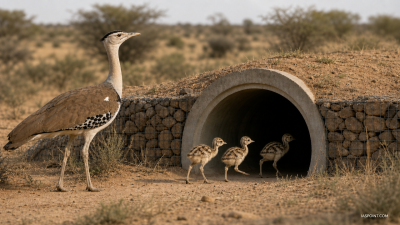
Three Great Indian Bustard chicks (R9, R10, R11 — two males, one female), aged about one month, were placed on 26 July 2026 into a rewilding tunnel at the Godawan Conservation Centre, Ramdevra, Jaisalmer.
The Rewilding Tunnel
- Purpose: minimise human imprint and simulate natural arid‑land conditions for captive‑bred chicks prior to release.
- Operational measures: external feeding, restricted human access and continuous CCTV surveillance for about four months.
- Behavioural targets: development of foraging skills, anti‑predator responses and desert adaptation before soft release.
Species profile and threats
- Scientific name: Ardeotis nigriceps.
- Conservation status: IUCN — Critically Endangered; listed under Schedule I of the Wildlife (Protection) Act, 1972.
- Habitat: arid and semi‑arid grasslands, primarily Thar Desert ecosystems in Rajasthan.
- Primary threats: collisions with powerlines, habitat fragmentation from infrastructure and agriculture, and very low reproductive rates.
Release site and management
- Target area: Desert National Park (Jaisalmer and Barmer) identified for phased reintroductions.
- Post‑release monitoring: planned survival tracking and habitat use studies to inform adaptive management.
- Recovery strategy: captive‑breeding combined with soft‑release (rewilding) as part of species recovery efforts.
IASPOINT Booster Facts
- Nest ecology: ground‑nesting species with low clutch success, increasing vulnerability to disturbance.
- Conservation instruments: protected area management, powerline mitigation (insulation/route realignment) and captive‑breeding protocols are primary interventions.
- Rajasthan role: principal stronghold for in‑situ and ex‑situ conservation of the species in India.