
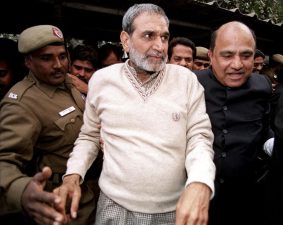
A Delhi court convicted former Congress MP Sajjan Kumar for his role in the 1984 anti-Sikh riots. This conviction relates specifically to the murders of Jaswant Singh and Tarundeep Singh. The incident occurred in Saraswati Vihar on November 1, 1984, shortly after the assassination of Prime Minister Indira Gandhi. The court’s ruling marks the importance of witness reliability and the long-standing impact of the riots on the Sikh community.
Background of the Anti-Sikh Riots
The anti-Sikh riots erupted in November 1984 following the assassination of Indira Gandhi. Thousands of Sikhs were killed in violent attacks across India. The government response was widely criticized for being inadequate. Many political leaders were accused of inciting violence.
Legal Proceedings and Witness Testimonies
The case against Sajjan Kumar was initiated based on an FIR filed in 1991. This FIR was based on an affidavit given to the Justice Ranganath Mishra Commission. The commission was established to investigate the riots and recommend preventive measures. Key witnesses included the victims’ family members. Their testimonies were crucial in establishing Kumar’s culpability.
The Court’s Findings
Judge Kaveri Baweja ruled in favour of the reliability of the witnesses. The court found that the complainant had identified Kumar at the earliest opportunity after seeing his photographs. The judge dismissed the defence’s arguments regarding the delay in witness testimony. The court concluded that the memories of those who witnessed the killings were vivid and credible.
Previous Convictions and Ongoing Cases
Sajjan Kumar is currently serving a life sentence for a separate case involving the murder of five individuals during the riots. He had been acquitted in another case concerning the deaths of seven Sikhs. Several appeals against his acquittals and convictions are pending in higher courts, including the Supreme Court.
Public and Political Reactions
The verdict has elicited mixed reactions from the public and political circles. Many see it as a long-awaited measure of justice. Others question the broader implications for political accountability in cases of communal violence. The conviction has reignited debates on the role of political leaders in inciting violence.
Future Legal Developments
Following the conviction, Kumar’s legal team is expected to appeal the decision. The outcomes of pending cases against him may influence public perception and legal precedents regarding accountability for communal violence in India.
Questions for UPSC:
- Critically analyse the impact of the 1984 anti-Sikh riots on contemporary Indian society.
- What are the challenges faced by the Indian judicial system in delivering justice for communal violence? Explain.
- Comment on the role of political leaders during communal riots, using the 1984 anti-Sikh riots as an example.
- What measures can be taken to ensure accountability for communal violence in India? Discuss with suitable examples.
Answer Hints:
1. Critically analyse the impact of the 1984 anti-Sikh riots on contemporary Indian society.
- The riots resulted in thousands of deaths and widespread displacement, creating a long-lasting trauma within the Sikh community.
- They brought into light systemic failures in law enforcement and governance, leading to distrust in political institutions among minority communities.
- The events have influenced communal relations and identity politics in India, contributing to ongoing tensions and sectarian divides.
- There has been a persistent demand for justice and accountability, shaping advocacy for human rights and legal reforms.
- The riots serve as a reminder of the need for communal harmony and the importance of addressing historical grievances in contemporary discourse.
2. What are the challenges faced by the Indian judicial system in delivering justice for communal violence? Explain.
- Delayed justice due to lengthy legal processes and backlog of cases undermines public faith in the judicial system.
- Witness intimidation and fear of reprisal often deter victims and witnesses from coming forward, affecting case outcomes.
- Political interference and biases can compromise the independence of investigations and trials related to communal violence.
- Inadequate legal frameworks and lack of specific laws addressing communal violence hinder effective prosecution.
- The complexity of communal riots often results in difficulties in gathering evidence and establishing culpability, impacting convictions.
3. Comment on the role of political leaders during communal riots, using the 1984 anti-Sikh riots as an example.
- Political leaders have been accused of inciting violence, as seen with allegations against Congress leaders during the 1984 riots.
- Some leaders exploited communal sentiments for electoral gains, exacerbating tensions and violence during the riots.
- The lack of accountability for political figures involved in instigating violence raises concerns about the rule of law and justice.
- After the riots, the response of political leaders was criticized for being inadequate, contributing to a perception of impunity.
- The events have prompted calls for stricter regulations on political speech and actions during communal tensions to prevent future violence.
4. What measures can be taken to ensure accountability for communal violence in India? Discuss with suitable examples.
- Establishing fast-track courts specifically for cases of communal violence can expedite justice and reduce delays.
- Strengthening witness protection programs to encourage testimonies without fear of reprisal is crucial for fair trials.
- Implementing comprehensive legal reforms, including specific laws against hate crimes and communal violence, can enhance accountability.
- Encouraging community engagement and dialogue initiatives can help build trust and prevent communal tensions from escalating.
- International human rights standards and oversight can be integrated into domestic laws to ensure adherence to justice principles.