
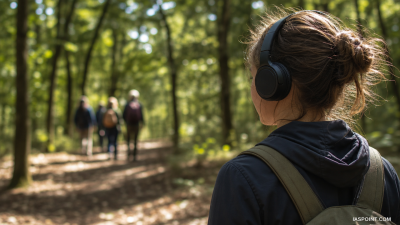
World Listening Day is observed on 18 July. The day was established in 2010 by the World Listening Project; the date marks the birthday of Raymond Murray Schafer, a pioneer of acoustic ecology.
The Core Concepts
- Acoustic / soundscape ecology: study of relationships among organisms, humans and environment through sound; analyses spatial and temporal sound patterns.
- Soundscape components: biophony (animal sounds), geophony (wind, rain, waves), anthrophony (human-made noise).
- Practices: soundwalks, field recording and listening sessions for qualitative and quantitative assessment.
Methods and Metrics
- Passive Acoustic Monitoring (PAM): automated long-term recording for species detection, diel and seasonal trend analysis.
- Acoustic indices: Acoustic Complexity Index (ACI), Bioacoustic Index (BI) and Normalised Difference Soundscape Index (NDSI) quantify biodiversity signals and anthropogenic intrusion.
Applications and Legal Links
- Biodiversity surveys: PAM used for birds, bats, amphibians and cetaceans to infer presence, activity patterns and impacts of habitat change.
- Environmental regulation (India): Noise Pollution (Regulation and Control) Rules, 2000 set permissible limits; acoustic monitoring informs Environmental Impact Assessments under the Environment (Protection) Act, 1986.
- Organisations: World Listening Project (founded 2008) promotes research and public engagement on soundscapes.
IASPOINT Booster Facts
- Raymond Murray Schafer: authored “The Soundscape” (1977) and popularised the term “soundscape”.
- World Listening Day: observed annually on 18 July since 2010.
- International links: bioacoustic methods are referenced in IUCN and CBD guidance for monitoring species and habitat condition.