
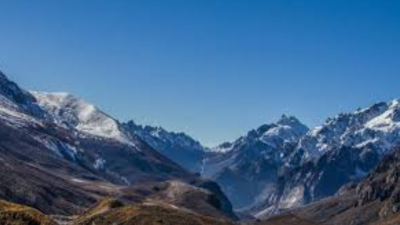
The International Centre for Integrated Mountain Development (ICIMOD) released its Hindu Kush Himalaya (HKH) Monsoon Outlook 2026 on June 11, 2026. The report forecasts a hotter and drier-than-normal June-to-September monsoon across several South Asian nations, including India, Nepal, Bhutan, and Pakistan. Climatologists warn that this overall reduction in seasonal rainfall will not minimize disaster risks. Instead, the region faces an intensified dual threat of prolonged droughts and sudden, destructive flash floods driven by shifting macro-climate parameters.
Meteorological Drivers and Temperature Anomalies
The projected weather patterns for the 2026 summer monsoon stem from large-scale oceanic conditions and land-cover changes across the Northern Hemisphere.
Influence of El Niño Conditions
Climate models from regional and international monitoring systems indicate that the El Niño-Southern Oscillation (ENSO) is transitioning from a neutral phase into active El Niño conditions. This equatorial Pacific warming pattern disrupts the traditional circulation of the southwest monsoon, suppressing aggregate seasonal rainfall across the Indian subcontinent and neighboring mountain ecosystems.
Elevated Temperature Projections
Most of the HKH territory expects above-normal daytime and nighttime temperatures. Regional models project that seasonal temperatures will remain 0.5°C to 2.0°C higher than the baseline average calculated between 2010 and 2024. These warmer conditions are likely to intensify heat stress and exacerbate seasonal wildfires across fragile mountain terrains.
Depleted Natural Water Buffers
The region recorded below-normal snow cover and lower snow persistence during the January-to-March 2026 winter cycle. Consequently, the mountains are entering the monsoon season with a degraded seasonal water buffer. This lack of accumulated snow storage leaves river systems, downstream spring lines, and groundwater recharge networks highly vulnerable to immediate rainfall fluctuations.
The Dual-Hazard Paradox
The core challenge highlighted in the 2026 outlook is the co-existence of moisture deficits and extreme hydrological events within the same geographic season.
| Climatic Phenomenon | Immediate Hazards Generated | Primary Vulnerable Areas |
| Prolonged Dry Spells | Soil moisture depletion, drying agricultural springs, forest fires | Mid-hills, rain-shadow valleys, rainfed agricultural belts |
| Short, Intense Rain Bursts | Flash floods, mudslides, debris flows, slope failures | Narrow mountain valleys, steep riverine settlements |
| Thermal Acceleration | Glacial Lake Outburst Floods (GLOFs), rapid permafrost degradation | High-altitude glacial basins, moraine-dammed lakes |
Shorter and More Violent Rain Bursts
Although total volumetric rainfall is projected to drop below historical averages, localized precipitation is becoming more volatile. Topographical features and land-cover characteristics are altering local microclimates, compressing precipitation timelines. Rather than steady seasonal showers, the region expects compressed bursts of high-intensity downpours.
Interplay with Western Disturbances
The unusual persistence of Western Disturbances—extratropical storms originating in the Mediterranean region—during the monsoon months increases the threat of mountain disasters. When these mid-latitude westerly troughs collide with low-pressure monsoon currents over northern India and Nepal, they trigger catastrophic cloudbursts, heavy hailstorms, and localized flash floods.
Multi-Sectoral Socio-Economic Impact
The combination of extreme heat and erratic moisture distribution alters critical ecological and economic sectors across South Asia.
Agriculture and Food Security
Extended dry spells paired with high evaporative losses cause severe soil moisture stress during critical crop sowing cycles. This moisture deficit reduces the productivity of rainfed mountain agriculture. Conversely, sudden intense downpours wash away fertile topsoil and destroy terrace farms along steep slopes.
Water and Energy Infrastructure
Low runoff from depleted winter snowpacks, combined with delayed monsoon advancement, strains drinking water supply lines. Mountain communities rely heavily on local springs, which face premature drying. In terms of energy, reduced river discharge limits generation capacities at run-of-the-river hydroelectric power plants, creating power deficits during periods of peak summer cooling demand.
Public Health and Tourism
Elevated temperatures amplify public health risks, leading to severe heat stress and changes in the vector dynamics of waterborne and vector-borne diseases at higher elevations. Additionally, sudden landslides and flash floods cause infrastructure failures along critical pilgrimage and border transit corridors, disrupting tourism networks and regional transport links.
IASPOINT Booster Facts for UPSC
- About ICIMOD: Established in 1983, the International Centre for Integrated Mountain Development is an independent regional intergovernmental learning and knowledge-sharing center. It serves the eight regional member countries of the HKH chain: Afghanistan, Bangladesh, Bhutan, China, India, Myanmar, Nepal, and Pakistan, with its headquarters located in Kathmandu, Nepal.
- The “Third Pole” Dimension: The HKH region contains the largest volume of ice and snow outside the Arctic and Antarctic poles. It forms the fountainhead of ten major Asian river basins—including the Indus, Ganga, Brahmaputra, Mekong, Yangtze, and Yellow rivers—sustaining nearly two billion people downstream.
- Role in Shaping the Indian Monsoon: The Tibetan Plateau and the adjacent Himalayan arc act as a physical barrier and a powerful elevated heat source during the summer months. This thermal engine intensifies the low-pressure cell over Central Asia, drawing moisture-laden winds across the equator from the Indian Ocean to drive the southwest monsoon.
- Transition to Impact-Based Forecasting: ICIMOD is advocating for a shift from traditional event-based meteorology to “Impact-Based Forecasting.” This methodology maps meteorological data directly against socio-economic exposure and physical vulnerabilities, allowing disaster management teams to issue warnings based on what the weather will do rather than what it will be.
- The S2S Prediction Framework: The 2026 monsoon outlook utilizes the HKH Sub-seasonal to Seasonal (S2S) prediction system. This advanced framework bridges the gap between short-range daily weather outlooks and long-range seasonal models, running with technical support from the Institute of Atmospheric Physics at the Chinese Academy of Sciences (CAS).
- Glacial Vulnerability Metrics: Himalayan glaciers are losing mass at accelerated rates due to global warming. Mountain monitoring networks have identified over 3,000 glacial lakes across the Hindu Kush Himalaya, with dozens categorized as unstable and prone to structural failures that can trigger GLOFs.
