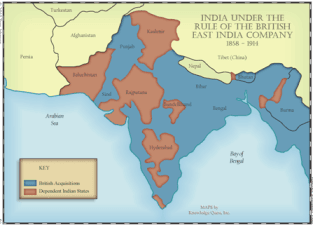
The British East India Company was a powerful trading entity. It played a role in India's colonial history. Established in 1600, it expanded its influence over time. The company controlled trade in spices, textiles, and tea. Its actions led to significant political changes. The company’s rule eventually paved the way for direct British governance. This period shaped modern India’s socio-economic landscape.
Before the advent of European colonialism, India was a land'of extensive manufactures with Indian artisans achieving'worldwide fame for their skills. In fact the reason for India's'favourable foreign trade...
One of the most significant things the British did to Westernise'India was to introduce a modified version of English education'but this was a process marked by considerable polemics....
The onset of British influence in India differed both in manner'and in kind from that of other historical invasions. The British'did not come either as a migrating group...
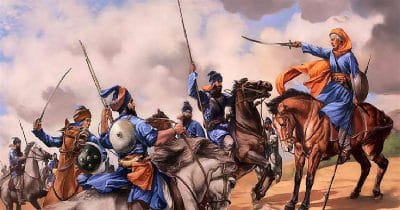
Ranjit Singh was the son of the Sukerchakia misl chief, Mahan'Singh. He was only 12 years of age when his father died in'1792. He inherited a small kingdom...
Even after the settlement of 1818 , some parts of the subcontinent'remained out of British control. These included the Himalayan'states to the north, the valley and hill tracts...
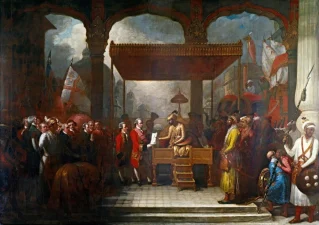
After Clive's settlement in 1765, the East India Company had no desire for any further acquisitions. Its primary object was still trade; it regarded the acquisition of Bengal...
The departure of Clive signalled the release of acquisitive urges by the company's Bengal servants. These urges were so strong that Clive's successor as the governor, Henry Vansittart,...