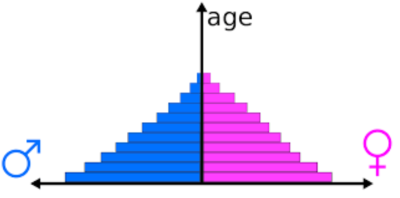
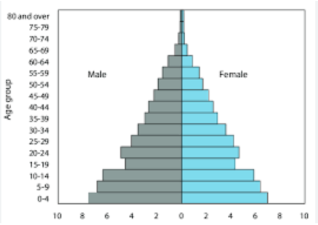
The sex ratio refers to the number of males for every 1,000 females in a population. It is a crucial demographic indicator. In India, the sex ratio has historically been skewed. Cultural preferences for sons have influenced this imbalance. The Constitution promotes gender equality. Efforts are ongoing to improve the ratio. Awareness campaigns aim to change societal attitudes. A balanced sex ratio is vital for social stability.
Sex composition refers to the distribution of males and females in a population. It is a fundamental demographic characteristic. Changes in this composition reflect socio-economic and cultural patterns....
India’s port architecture is fundamentally shaped by the geomorphological differences between the Western and Eastern Coastal Plains. These geological variations determine the natural draft depth, siltation rates, and...
India, a land of diversity and contrasts, is not only home to a rich tapestry of cultures but also boasts a population that reflects a dynamic interplay of...
Demographics play a pivotal role in shaping societies, economies, and public policies. One of the fundamental tools for visualizing demographic structures is the age-sex pyramid. This graphical representation...
The International Organization for Migration (IOM) and the François-Xavier Bagnoud Center for Health and Human Rights at Harvard University have joined forces to produce a comprehensive report titled...
The Chief Minister of Uttar Pradesh recently launched "Operation Conviction," a strategic initiative aimed at expediting the conviction process for cases involving heinous crimes such as rape, murder,...
Census of India denes sex ratio as number of females per thousand males. Sex ratio in India has been historically negative i.e. unfavourable to females. In the pre-independence...
Migration has both positive and negative consequences of which economic, demographic social and environmental consequences are more important. Economic Consequences Most people migrate for economic gain and economic...
Migration refers to the movement of population from one place to another. Apart from birth rates and death rates, migration is the third most important factor which determines...