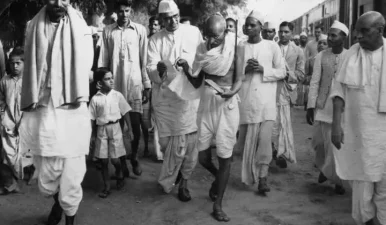
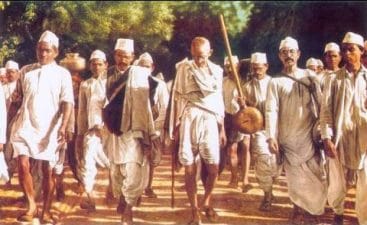
Socio-religious movements emerged in India during the 19th and early 20th centuries. They aimed to reform society and address social issues. Leaders sought to eliminate caste discrimination and promote gender equality. These movements often blended religious beliefs with social activism. They played a crucial role in shaping modern Indian identity. Their impact is still felt in contemporary discussions on social justice and equality.
"The growth and the development of the national movement in India went a long way to develop certain values and ethos, which contributed a lot to the constitution-making...
1. Fundamentals of Society: (a) Modernity and social changes in Europe and emergence of sociology. (b) Scope of the subject and comparison with other social sciences.(c) Sociology and...
UPSC Civil Services (Mains) Examination Syllabus of Anthropology. Paper I 1. Meaning and scope Anthropology Relationship with other disciplines: History, Economics, Sociology, Psychology, Political Science, Life Science, Medical...
The'19th'century in India witnessed both the reforms as well as'the revolts. The reforms in the'19th'century were initiated by'both the Britishers (the East India Company and the British'Government) as...
The birth and growth of the Indian nationalism, as in every'other country like India, have been the result of numerous'factors. Some factors sowed it seeds, while others nurtured'its...
Religious and ideological organizations have long played a significant role in shaping societies and politics globally. Their philosophies run the gamut from moderate to extreme. Islamic Defender's Front...