Synthetic textiles are man-made fabrics. They are created from chemical processes. Common types include polyester, nylon, and acrylic. These materials are durable and resistant to wrinkles. They are often used in clothing and upholstery. Synthetic textiles can be produced in various colours and patterns. Their production has environmental implications. Recycling efforts are increasing to mitigate waste.
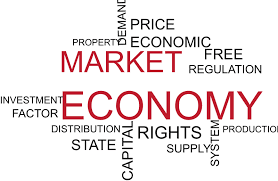
A free private-enterprise economy governed by consumer sovereignty, a price system, and the forces of supply and demand. Mixed economic systems Economic systems that are a mixture of...
States, namely Karnataka, West Bengal and Jammu and Kashmir, account for 98% of the total production of silk textiles. Karnataka is the foremost producer and accounts for 50%...
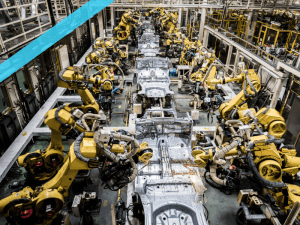
Engineering industries include those which produce implements, tools and machinery from metals. Following are the main types of engineering industries: Machine tools for cutting, grinding, rolling, drilling, welding...
Introduction Manufacturing is the process of converting raw materials into more useful and valuable articles with the help of tools and machines. A large number of factors affect...
Economically, this was an era of increased commercial'agricultural production, rapidly expanding trade, early'industrial development, and severe famine. The total cost of'suppressing the Revolt of 1857-1859, which was equivalent...
The Union Cabinet chaired by Prime Minister Narendra Modi approved the Production-Linked Incentive (PLI) Scheme for 10 key sectors. Key Points for UPSC Prelims The scheme which was...
As the name suggests, Man-made fibres are the fibres created by man. Man-made fibres (MMF) are mainly of two types namely synthetic and cellulosic. Synthetic fibres are produced...
The Textiles Committee, based in Mumbai, has recently stepped forward to undertake the testing and certification process for Personal Protective Equipment (PPE) that is required by healthcare workers...
The National Rural Infrastructure Development Agency (NRIDA) has recently asserted the usage of coir geo textiles in constructing rural roads, under the scheme Pradhan Mantri Gram Sadak Yojana...
The Government of India Act 1935 established Provincial Autonomy, leading to democratic elections in early 1937 under the system of separate electorates. The Indian National Congress achieved a...