
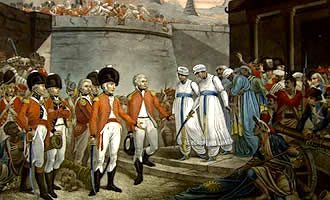

The Royal Indian Navy (RIN) Mutiny, also known as the Indian Naval Mutiny, occurred on February 18, 1946. It was revolt against British rule in India. The mutiny began among naval personnel and quickly spread to various sectors of society. It is often overshadowed by other independence movements but played important role in India’s struggle for freedom.
Background
The mutiny emerged in the context of rising Indian nationalism. The atmosphere was charged with revolutionary ideas, partly influenced by global events during World War II. The Soviet Union’s leadership inspired many Indians to believe in the possibility of revolt.
Initial Causes
Several factors contributed to the mutiny:
- Discrimination: Indian sailors faced racial discrimination in the Royal Indian Navy. Their pay and living conditions were inferior to those of British sailors.
- Harsh Conditions: Poor living and working conditions were intolerable for many ratings.
- Detention of Dutt: The arrest of BC Dutt, a sailor who protested against British rule, sparked anger among his peers.
- Political Prisoners: Sailors demanded the release of political prisoners from the Indian National Army (INA) trials.
Spread of the Mutiny
The mutiny began in Bombay and rapidly gained momentum. Over 20,000 sailors participated, with support from civilians across British India. Key cities involved included Karachi, Calcutta, and Madras. The revolt quickly escalated from a hunger strike to widespread public rebellion.
Naval Central Strike Committee
The sailors formed the Naval Central Strike Committee (NCSC) to coordinate their actions. M.S. Khan and Madan Singh were elected as president and vice president, respectively. The NCSC played important role in organising the mutiny.
Public Support
The rebellion received overwhelming public support. On February 22, 1946, workers in Bombay went on strike. Public transportation was disrupted, and businesses came to a halt. The British authorities were alarmed by the scale of the uprising.
Military Reaction
In response to the mutiny, the British government deployed military forces to restore order. However, the army’s loyalty was questioned as some units, including the Royal Indian Air Force, refused to fire on the strikers.
Political Reactions
The mutiny was met with mixed reactions from Indian political leaders. The Indian National Congress and the Muslim League condemned the revolt, fearing it would jeopardise the peaceful transfer of power. Only a few leaders, such as Aruna Asaf Ali, openly supported the sailors.
Impact on British Authority
The mutiny revealed the British government’s declining control over its military forces in India. It demonstrated that the Indian armed forces were no longer entirely loyal to British rule. This realisation prompted discussions about India’s demand for independence.
Consequences of the Mutiny
The mutiny resulted in consequences for both the British and Indian leaders:
- Dismissals: Over 476 sailors were dismissed from service following the revolt.
- Shift in Power: The British began to reconsider their position in India, leading to accelerated discussions about independence.
- Public Sentiment: The rebellion intensified the desire for freedom among the Indian populace.
Conclusion of the Mutiny
The mutiny officially ended on February 23, 1946, after negotiations between leaders like Sardar Patel and the NCSC. The rebels were assured they would not face punishment, leading to their surrender.
Legacy of the RIN Mutiny
The Royal Indian Navy Mutiny is chapter in India’s struggle for independence. It brought into light the unity among various communities against colonial rule. The rebellion also marked a turning point in the relationship between the British government and Indian forces.
Peasant Movements in India
Alongside the naval mutiny, peasant movements played a vital role in India’s independence. These movements aimed to address the grievances of the agrarian population against British economic policies.
Economic Policies and Peasant Discontent
The British implemented mercantilist policies that adversely affected Indian agriculture. These policies led to:
- Commercialisation: Traditional agrarian relationships were disrupted.
- Land Revenue Settlements: New laws made land a tradable entity, burdening peasants with high taxes.
- Deforestation: Land was cleared for cash crops, further displacing local farmers.
Phases of Peasant Movements
Peasant movements can be broadly categorised into two phases:
- Pre-1857: Uprisings were often spontaneous, driven by local grievances against zamindars (landlords).
- Post-1857: Increased involvement of educated middle-class individuals led to more organised resistance.
Key Peasant Revolts
Several peasant revolts occurred during the British Raj:
- Indigo Revolt (1859-60): Peasants in Bengal resisted forced cultivation of indigo.
- Deccan Riots (1875): Farmers in Maharashtra revolted against oppressive moneylenders.
- Pabna Movement (1873-1885): Peasants in Bengal organised against zamindars for unjust practices.
Indigo Revolt Details
The Indigo Revolt was led by the Biswas brothers and other local leaders. Peasants attacked indigo factories and protested against exploitation. The British response included the establishment of the Indigo Commission to address grievances.
Deccan Riots Overview
The Deccan Riots were sparked by the exploitation of Kunbis (cultivators) by Vanis (moneylenders). The riots involved violent confrontations and destruction of debt records. The British government eventually passed the Deccan Agriculturists Relief Act to protect peasants.
Pabna Movement Highlights
The Pabna Movement involved the formation of no-rent unions. Peasants protested against illegal evictions and rent hikes. The British government intervened militarily, but an inquiry led to some legislative changes.


