
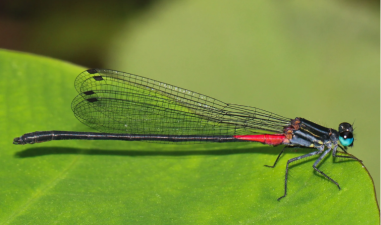
Northeast India has added three new dragonfly species to its known biodiversity, strengthening its reputation as one of the country’s richest but least studied ecological regions. The discoveries were made during surveys in Assam, Meghalaya and Arunachal Pradesh, and belong to the rare dragonfly genus Sarasaeschna.
New Species Identified
The three newly described species are:
- Clouded Boghawker (Sarasaeschna nuboides)
- Siang Boghawker (Sarasaeschna sigotaayo)
- Long-tailed Boghawker (Sarasaeschna dosdewaensis)
Two species were found near a small forest pond in Arunachal Pradesh’s Siang Valley. The third was recorded in Assam’s Karimganj district. The study also revisited the Khasi Boghawker (Sarasaeschna khasiana), first described in 1968, and confirmed its presence in the Khasi Hills of Meghalaya after several decades.
Habitats and Field Significance
These dragonflies were observed in dense, wet forests, forest streams and shallow water bodies. Their fast flight and preference for heavily vegetated habitats make them difficult to detect. Researchers noted that such species are often under-sampled because they live in remote and ecologically sensitive landscapes.
Biodiversity Value of Siang Valley
The Siang Valley in Arunachal Pradesh is emerging as a major biodiversity hotspot. The two species found there mark the 10th and 11th new species reported from a small area of the valley. More than 45 other non-dragonfly species have also been documented from the region in the past 15 years. Several discoveries have been made outside protected areas, including community-owned forests and roadside habitats.
Conservation and Research Importance
Dragonflies are important indicators of freshwater ecosystem health. Their presence reflects the condition of streams, ponds and surrounding forests. The findings show the role of local naturalists, community participation and sustained field research in documenting India’s hidden biodiversity before it is lost to habitat pressure.
Last Modified: April 25, 2026