
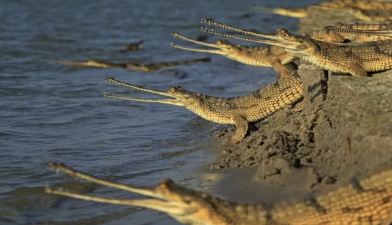
The latest basin-wide survey has mapped the status of the gharial, a critically endangered fish-eating crocodile, across the Ganga river system. The study found 3,037 gharials in 13 of 22 surveyed rivers, showing both the species’ fragile condition and the continued importance of river conservation. The survey covered 7,680 kilometres between November 2020 and March 2023.
Survey Findings
The Chambal River remains the main stronghold of the species, with 2,097 gharials. Other important habitats include:
- Ghaghara River – 463 gharials.
- Girwa River – 158 gharials.
- Ramganga River in Corbett Tiger Reserve – 48 gharials.
The presence of gharials in only 13 rivers underlines their restricted distribution and dependence on suitable freshwater habitats.
Species Vulnerability
Gharials are highly sensitive to changes in river conditions. They need clean water, stable temperatures and undisturbed sandbanks for nesting and basking. Their specialised fish-based diet makes them more vulnerable to ecological change than many other crocodilian species. Disturbance in river systems can quickly affect breeding and survival.
Major Threats
The study identifies several serious risks to gharial survival:
- Illegal sand mining, which damages riverbeds and nesting sites.
- Discarded fishing nets, which can trap and drown gharials.
- Rising pollution, which reduces water quality and prey availability.
These pressures continue to weaken already small and fragmented populations.
Conservation Measures
The Wildlife Institute of India has recommended stronger coordination among conservation bodies through a dedicated task force. It has also called for awareness campaigns to stop the dumping of fishing nets into rivers. The use of modern technology for future population monitoring has been suggested. The study notes that gharial numbers may recover in rivers such as the Son, Kosi and Gandak if pollution declines and habitat conditions improve.
Last Modified: April 26, 2026