
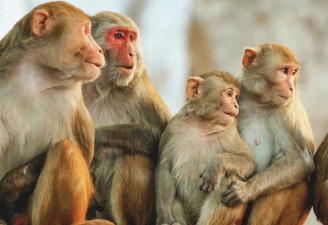
Delhi has shifted thousands of monkeys from residential and commercial areas to the Asola-Bhatti Wildlife Sanctuary over the last five years as part of efforts to address the city’s monkey menace. The issue has gained attention due to repeated incidents of monkey bites, attacks on children, and nuisance in public spaces. Civic bodies have been tasked with catching and relocating the animals rather than sterilising them.
Relocation Figures in Delhi
A total of 6,591 monkeys were relocated from 2021 to 2025. The number rose sharply after 2021, when only 198 monkeys were shifted. In 2022, 1,484 monkeys were relocated. The figure increased to 1,643 in 2023, 1,432 in 2024, and 1,534 in 2025. The Municipal Corporation of Delhi also caught 1,121 monkeys between April and December 2025 and moved them to the Asola-Bhatti mines area.
Legal and Administrative Framework
The Delhi High Court in 2024 directed the Municipal Corporation of Delhi and the New Delhi Municipal Council to deal with monkey nuisance in public spaces. The court noted that after changes in wildlife law, the monkey species common in Delhi had been delisted as a protected species. It said the animals should be treated at par with stray animals and removed from parks, hospitals, government offices, and residential colonies.
Public Safety and Local Response
Monkey activity in Delhi has caused concern among residents, especially in colonies and office areas where food-related encounters are common. In the absence of a comprehensive population-control policy, many housing societies and large offices hire langur handlers to scare monkeys away. These handlers use langur-like calls to disperse monkey groups from crowded localities.
Last Modified: April 27, 2026