
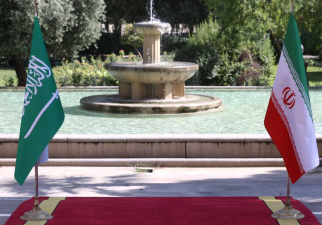
For decades, rivalry between Saudi Arabia and Iran shaped the fault lines of West Asian geopolitics. Sectarian divisions, proxy wars, and competing regional ambitions placed the two on opposite sides from Lebanon and Syria to Yemen and Iraq. Yet, when Iran was shaken by mass protests and faced threats of U.S. military action, Riyadh’s response was strikingly restrained — even protective. Saudi Arabia reportedly refused to allow its territory or airspace to be used for an American strike and quietly lobbied Washington against escalation. This apparent reversal reveals how regional calculations in West Asia are undergoing a significant shift.
From Sectarian Rivalry to Strategic Caution
The rivalry between and has long been framed through a Sunni–Shia lens. Iran backed Shia militias such as Hezbollah, while Saudi Arabia supported Sunni factions and governments. However, Riyadh’s muted response to Iran’s internal unrest signals that sectarian competition is no longer the sole, or even primary, driver of its foreign policy.
Fear of Setting a Dangerous Precedent
One major reason for Saudi caution lies in the narrative underpinning Western intervention. Both Iran and Saudi Arabia are authoritarian systems. Riyadh appears wary of legitimising the idea that external military force can be justified as a response to internal repression. If Iran could be “liberated” through foreign bombing, similar arguments could one day be applied to the kingdom itself — particularly if it were to drift from U.S. strategic priorities.
What distinguishes Saudi Arabia from Iran is not governance, but geopolitics and economics. Saudi Arabia remains deeply integrated into global markets, hosts U.S. troops, and is a long-standing American ally. Iran, by contrast, is isolated by sanctions and treated as an adversary in Washington and Tel Aviv.
Lessons from Iraq and Libya
Saudi Arabia and other Gulf states have also internalised the lessons of past interventions. The U.S.-led invasion of Iraq and NATO’s intervention in Libya demonstrated how regime change can fracture states and destabilise entire regions. An externally driven collapse of Iran — a country of over 90 million — could unleash prolonged chaos, fuel militancy, and generate large refugee flows into neighbouring countries, including the Gulf monarchies themselves.
The Israel Factor in Gulf Calculations
More fundamentally, Saudi Arabia’s stance reflects growing unease over Israel’s recent actions. Since October 7, 2023, has expanded military operations across multiple theatres. Iran-backed has been weakened, and the collapse of the pro-Iran regime of in Syria has altered regional dynamics.
Saudi Arabia and other Gulf monarchies view Israel’s expanding military footprint — often with U.S. backing — as destabilising. Israeli strikes on Iran, and even on Qatar, another U.S. ally, have heightened fears that Israel is testing red lines across the region.
Balance of Power Concerns
A violent collapse of the Islamic Republic of Iran would decisively tilt the regional balance of power in Israel’s favour. For Riyadh, this is an undesirable outcome. A dominant Israel, combined with a retreating U.S. security umbrella, could leave Gulf monarchies exposed. Preserving Iran as a functioning state, even a rival one, thus becomes a strategic necessity to prevent regional hegemony by any single power.
Saudi Arabia’s Strategic Diversification
Reflecting these anxieties, Saudi Arabia has begun diversifying its security partnerships. It has forged closer ties with , explored rapprochement with , rebuilt relations with after years of blockade, and strengthened coordination with . These moves suggest a deliberate effort to reduce overdependence on the United States.
What to Note for Prelims?
- Saudi–Iran rivalry and its sectarian dimension
- Role of U.S. military presence in Gulf security
- Regional impact of regime-change interventions
- Shifting balance of power in West Asia
What to Note for Mains?
- Analyse why Saudi Arabia opposed U.S. military action against Iran despite long-standing rivalry
- Discuss how Israel’s recent actions are reshaping Gulf security perceptions
- Examine the implications of declining U.S. security dominance in West Asia
- Assess how regional powers balance rivalry and stability in West Asian geopolitics