
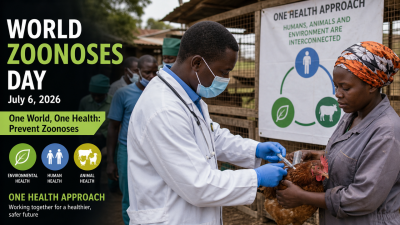
World Zoonoses Day was observed globally on 6 July 2026 with the theme “One World, One Health: Prevent Zoonoses”. India cited the One Health approach as a central element of its public‑health strategy, with the Centre for One Health at the National Centre for Disease Control coordinating multisectoral action.
One Health: Concept
- Definition: Integrates human, animal and environmental health to prevent, detect and respond to zoonotic threats.
- Core functions: Joint surveillance, risk assessment, diagnostics, outbreak response and coordinated vaccine development.
Global scale and recent data
- Zoonotic burden: Over 60% of human infectious diseases originate in animals; nearly 75% of newly emerging pathogens are zoonotic.
- Preparedness gap: Global experts warn of inadequate readiness for a likely future zoonotic pandemic, citing surveillance and vaccine production shortfalls.
- Illustrative outbreak: Bundibugyo Ebola (DRC, Uganda): 1,481 confirmed cases and 454 deaths as of 3 July 2026.
Institutions and initiatives
- Centre for One Health (India): Located under NCDC to coordinate human‑animal‑environmental health actions and multisectoral surveillance.
- FAO: Calls for collective action on drivers of spillover; accepting One Health innovation entries until 10 July 2026.
- WOAH: Advocates investment in animal health systems to reduce zoonotic risk.
- ISID 2026 theme: “One World, One Health: Prevent Zoonoses”.
IASPOINT Booster Facts
- Annual observance: World Zoonoses Day falls on 6 July each year.
- Policy linkages: One Health aligns with India’s IDSP and National Action Plan on AMR for integrated surveillance.
- Technical priority: Interoperable human–animal surveillance and genomic sequencing are exam‑relevant capabilities.